How Did Laundry Detergents Evolve from Soap to Stain-Fighting Power?
Have you ever stared at a stubborn stain and wished your detergent had a bit more power? Knowing how detergents developed gives you the insight to tackle any laundry challenge with confidence.
In this article, we’ll walk through the key milestones that shaped your laundry routine:
- From ancient soap recipes to the first commercial bars.
- The chemical leap that created synthetic detergents.
- How enzymes became the secret weapon against organic stains.
- The push for concentrated, eco-friendly formulas.
- What today’s smart detergents mean for your fabrics.
I’ve tested these innovations for years on everything from my son’s soccer jerseys to my aunt’s wine spills.
The Ancient Art of Stain Fighting: What Did People Use Before Soap?
Picture a world without a laundry room. No Tide pods, no spray bottles of Shout.
When a stain hit a tunic or a rug, people got creative with what they had.
The Original Stain Removal Kit
Early methods were a mix of abrasive, acidic, and alkaline materials.
- Wood Ash: People mixed ash with water to make lye, a powerful alkali that could break down grease and oils on coarse linens and woolens.
- Plant Saps & Clays: Soapwort plant juice created a gentle lather. Fuller’s earth, a type of clay, was used to absorb grease stains from wool cloth.
- Natural Acids: Sour milk, fermented urine, or citrus juices acted as bleaching agents to lighten stains on light-colored fabrics.
- Mechanical Action: Stains were often scrubbed with sand, beaten with rocks in streams, or brushed with stiff bristles.
These methods worked on the sturdy, natural fabrics of the time like wool and linen, but they were brutal on anything delicate.
A silk robe or fine embroidery wouldn’t stand a chance against lye or abrasive scrubbing.
Field Note from Martha
“My grandmother in North Texas kept a jug of white vinegar by the washbasin,” my mom, Martha, always tells me.
“A splash on grass stains, a dab on underarm yellowing. It cuts through the grime and deodorizes. I still use it on Jason’s soccer socks.”
This trick shows how simple, acidic solutions have been trusted for generations.
We use the same principles today with safer, pantry-ready items.
Salt pulls up red wine like a magnet. Cornstarch sucks the oil out of a grease spot before you wash it. It’s not new magic. It’s old, proven science.
Soap’s Simple Start: How Did Lye and Fat Change Cleaning?
The big leap came when someone formalized the process. Soapmaking was born from two basic, available ingredients.
The key was lye, made by leaching water through wood ashes.
This caustic liquid was then boiled with rendered animal fats or oils.
Chemistry Corner: Saponification
This boiling process is called saponification.
Think of grease (fat) as a chain of little balls. Lye is a powerful, corrosive substance that attacks those chains. When heat is added, the lye breaks the fat apart and reassembles it into two new things: soap and glycerin.
The new soap molecules have a unique structure: one end loves water, the other end loves grease.
When you wash, the grease-loving end latches onto the oil in a stain. The water-loving end lets the whole mess rinse away.
This was revolutionary. For the first time, people had a reliable product that could actively lift grease from fabric.
Material Red Flags: A Harsh Reality
Early lye soap was incredibly harsh. The lye concentration was unpredictable.
Sometimes it was too weak to clean well. Other times, it was strong enough to burn skin and dissolve fibers.
This is why I would never use a historic lye soap recipe on modern fabrics like silk, wool, or elastic blends. This kind of treatment can be particularly risky for delicate fabrics, especially when dealing with stains like grease or oil on silk.
These delicate materials would be ruined, becoming brittle, discolored, or full of holes. My Aunt Jessica’s silk blouse or a vintage wool blanket would be destroyed.
The process was also slow and labor-intensive. You made a big batch, cured it for weeks, and hoped it turned out right.
This desire for a more reliable, less caustic, and easier-to-use product is what fueled the next century of innovation. People wanted the grease-cutting power without the risk of ruining their clothes.
Washing Gets a Machine: How Did the Industrial Revolution Help?
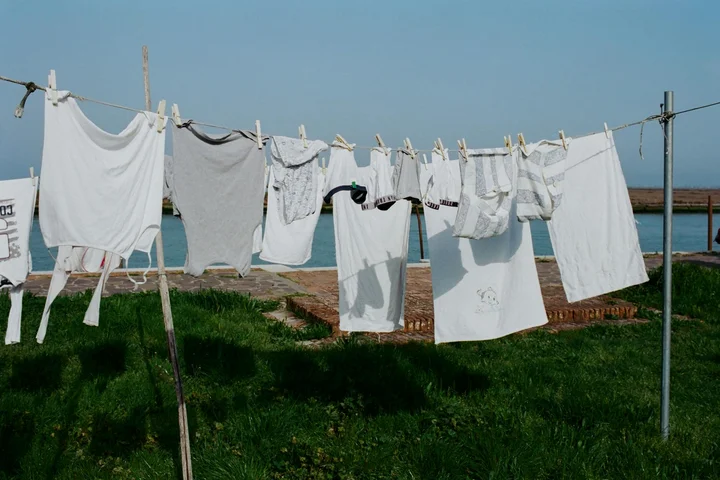
Before machines, cleaning clothes meant hours at a washboard. You scrubbed each item by hand. Your knuckles would get raw from the friction.
Mechanical washers and hand-cranked wringers changed everything. These machines used agitators to mimic that scrubbing motion for you. A wringer would squeeze out dirty water, saving your hands from twisting heavy, wet fabric.
This introduced a new problem: surface compatibility. Those early agitators were tough. They were fantastic for heavy work clothes, denim, and canvas. Delicate items like lace or fine linens could get shredded.
My husband Roger’s hunting gear would have loved it. My daughter Jessica’s little dresses would have been in trouble.
This era also saw the rise of commercial soap bars and flakes. You didn’t have to make soap from ash and fat at home anymore. You could buy a uniform bar or box of flakes.
It made the chore slightly less monumental.
I sometimes think about doing laundry for my family back then. Jason’s grass-stained soccer kit. Jessica’s mud-pie masterpieces. Roger’s work clothes from the yard.
The sheer volume of boiling water, hand-scrubbing, and wringing makes me appreciate my washing machine every single day. I’d have been at that washboard from sunrise to sunset.
Synthetic Solutions: Why Did Detergents Replace Soap?
Soap had a major flaw. In hard water, the minerals bind with soap to form a sticky, dull film called soap scum. You’ve seen it on shower doors.
That same film left clothes looking dingy and feeling stiff.
Synthetic detergents emerged in the early 1900s to solve this. They were engineered in labs. Their molecules don’t react with minerals in hard water.
This meant no more soap scum residue on your fabrics.
Panic-Level Assessment
Let’s rate how you’d feel facing an oil stain with each option:
Old-fashioned soap on an oil stain: 4/10 panic. It would lift some grease, but likely leave a greasy, gray film behind, especially in hard water. You’d probably see a faint ring after drying, especially on clothes.
Early synthetic detergent on an oil stain: 7/10 confidence. It could surround and lift the oil without the scum. The stain had a much better chance of vanishing completely.
The invention of synthetics created what I call the “Golden Window.” With soap, you often had to treat a stain immediately before the soap itself could set a residue.
Early synthetics gave you more time to treat a stain properly before the main wash. You could pre-treat a grass stain and know the cleaner wouldn’t harm the fabric before it even hit the agitator.
You use this principle all the time today. What’s the first thing you reach for on a cooking oil spill? Dish soap.
That blue dawn by my sink is a mild synthetic detergent. It’s brilliant at breaking down grease on fabrics because it’s designed to do exactly that in water, without leaving a sticky film behind. I use it on pizza-sauce stains before they go in the washer. It’s a direct descendant of those early chemical breakthroughs.
The Enzyme Era: How Did Science Target Protein Stains?

Laundry changed forever in the 1960s. Before that, removing tough stains meant hard scrubbing and hoping for the best, especially when trying to remove set-in stains from fabric.
My mom, Martha, still talks about wrestling with grass-stained clothes. Then enzyme detergents arrived. They targeted the stain itself.
The introduction of biological enzymes let detergents attack specific stain molecules, making previously impossible cleanup simple.
Chemistry Corner
Think of protease enzymes as microscopic pac-men. They hunt for protein chains.
Stains from blood, grass, or egg are made of proteins. The protease enzyme breaks these long chains into tiny pieces.
Protease enzymes chemically dismantle protein-based stains, transforming them into fragments that water can easily rinse away.
Jason’s soccer jerseys are my real-world test lab. They are always covered in mud, which holds grass and sweat proteins.
My pro-tip is simple. I keep a spray bottle of enzyme-based pre-treatment handy in the laundry room.
Spraying an enzyme cleaner on muddy uniforms before they dry stops the stain from setting into the fabric weave.
It works on Peeta’s muddy paw prints too. Just spray, wait ten minutes, and then wash as usual.
You can mimic this action with items from your kitchen. Here are safe DIY alternatives for protein stains.
- For blood: Make a paste with unseasoned meat tenderizer and cold water. The papain enzyme in it breaks down the blood.
- For egg or dairy: Soak the fabric in cool water with a bit of dish soap first, as heat can set the protein.
- Always remember: Blot, don’t rub. And test any method on a seam or hidden area first.
Cleaning Up Our Act: What Environmental Mistakes Were Fixed?
The early power of detergents came with a hidden cost. Formulas packed with phosphates created a big problem.
Phosphates washed into rivers and lakes. They acted as super-fertilizer for algae.
Phosphate runoff from laundry wastewater caused massive algae blooms that suffocated aquatic life by depleting oxygen.
Public outcry and new regulations in the 1970s forced a change. Detergent makers had to reformulate.
They replaced phosphates with safer builders like citrates and zeolites. Biodegradability became a key goal.
Regulations pushed the industry toward phosphate-free, biodegradable formulas that clean effectively without harming ecosystems.
This history guides everything we do at Stain Wiki. We advocate for methods that respect your home and the planet.
My aunt Jessica loves her red wine, but I only use oxygen-based cleaners on her spills. Harsh chemicals aren’t needed.
Choosing non-toxic, plant-based cleaners today is a direct lesson learned from the environmental oversights of the past.
We also learned from packaging waste. Remember those giant, bulky detergent bottles?
Modern concentrates, pods, and refill systems use far less plastic and water. My laundry shelf is much less cluttered now.
High-efficiency concentrates and reduced packaging are a practical response to the lesson of excessive plastic waste.
Today’s Stain-Fighting Arsenal: What’s in Your Modern Detergent?
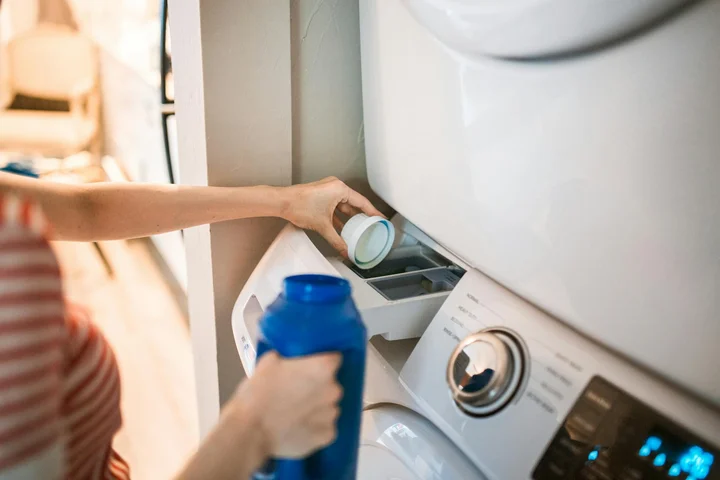
My laundry room doesn’t look like a science lab, but what’s inside my detergent bottles is pure chemistry. I treat stains for a living, and I’ve seen how these modern formulas work. They’re a team of specialized ingredients, each with a specific job.
The old soap-and-boiling-water method got things clean, but today’s detergents get things clean while preserving your clothes. If you ever need to remove soap detergent stains from clothes, there are simple methods that work. We’ll cover how to remove soap detergent stains from clothes in the next steps.
The Cleaning Crew Inside Your Bottle
Think of your detergent as a small, efficient cleanup crew assigned to your stained shirt.
- Oxygen Bleaches (like Sodium Percarbonate): This is my favorite gentle fighter. It activates in warm water to release oxygen bubbles that break up stains without the harshness of chlorine bleach. It’s safe for most colors, which is a game-changer.
- Surfactants: These are the muscle. They surround grease and dirt particles, loosen them from the fabric, and lift them into the wash water so they can be rinsed away.
- Polymers: These are the smart managers. They act like tiny guards, preventing the dirt that’s now in the water from settling back onto your clean clothes. This “anti-redeposition” keeps whites brighter.
- Enzymes: These are the specialized agents. Protease enzymes target protein-based stains like blood, grass, or baby food. Amylase enzymes tackle starchy spills like pasta sauce or pudding.
Modern detergents are a coordinated team where each ingredient tackles a different part of the stain problem, from lifting to brightening to holding dirt in suspension.
Recommended Products: Building Your Stain Kit
You don’t need a closet full of products. I recommend keeping two core types on hand, based on the stains you face most.
For my family, with Jason’s grass-stained soccer knees and Peeta’s muddy paw prints, an enzyme detergent is a must-have. It breaks down the biological part of the stain that soap alone can’t touch.
For colored clothing with food or drink spills, I reach for a detergent with built-in oxygen bleach or a separate oxygen-based stain remover powder. It lifts the stain without stripping the dye, especially when dealing with food and drink stains.
Choose a detergent based on your stain profile: enzymes for organic messes (mud, food, blood) and oxygen cleaners for color-safe brightening and stain lifting.
Post-Treatment Recovery: The Critical Final Step
Here’s the rule I learned after ruining one of Roger’s good work shirts: never, ever put a formerly stained item directly into the dryer.
The heat from a dryer will bake any lingering stain residue permanently into the fibers. It turns a faint shadow into a permanent mark.
- After washing, take the item out while it’s still damp.
- Check the stain area thoroughly under good light. If you see any trace of the stain, do not dry it.
- Instead, let it air dry completely. Once dry, you can re-treat the exact spot and wash it again.
Always air dry a stained item first to check if the stain is gone; the dryer’s heat is the point of no return for many stains.
On-the-Go Emergency Fix
Picture this: you’re at a restaurant and Aunt Jessica bumps your arm, splashing merlot on your sleeve. Panic sets in.
Here’s your modern quick trick. Signal the server or bartender for a glass of club soda and a few clean napkins. Pour the club soda directly onto the stain from the back of the fabric. Blot, don’t rub, aggressively from the front with the dry napkin.
The carbonation and mild salts in the club soda can help lift the fresh wine to the surface, giving you a fighting chance until you can get home and properly treat it. I’ve done this more than once.
Material Red Flags: When Modern Help Can Harm
Advanced detergents are powerful, but not universal. Some fabrics need old-fashioned care.
Always avoid using bleach or oxygen cleaners on protein-based fibers like wool and silk. They will degrade and yellow these delicate materials. For these, a pH-neutral soap is still king.
Similarly, check care labels on items like down jackets or waterproof gear. Harsh surfactants and enzymes can strip their special coatings. When in doubt, a gentle hand wash is the safer bet.
Modern detergents are formulated for modern fabrics; always pause and check the care label on delicate or specialty items to avoid causing damage.
FAQ about Using Historical Stain-Fighting Knowledge Today
1. Are any ancient stain-removal methods still safe to use on modern fabrics?
Yes, but with major caution. Mild acids like white vinegar or lemon juice can still safely treat some stains, but avoid harsh abrasives like sand or unpredictable lye, which will damage most modern textiles. Always test any alternative method on a hidden seam first. Understanding pH—how acids and bases interact with fabric—can guide safer stain removal. We’ll delve into pH-based stain removal for fabrics next.
2. I’ve heard vintage washing methods are “tougher.” Should I scrub a stain harder like they did with a washboard?
No. Aggressive scrubbing can grind a stain deeper and fray fibers. Instead, gently blot from the back of the stain to push it out, then use a modern pre-treatment spray and let your washing machine’s agitator do the work. Modern fabrics and detergents are designed for this. This aligns with our guide debunking laundry myths about stain removal.
3. What’s a safe, modern substitute for the lye used in early soaps to pre-treat a greasy stain?
Use a mild, modern dish soap like blue Dawn. It’s a synthetic detergent designed to cut grease without the caustic risk of lye. Apply a drop directly to the stain, gently work it in, and let it sit for 5 minutes before washing.
4. My home has hard water and soap bars leave residue. Why are synthetic detergents better for this?
Synthetic detergent molecules don’t react with hard water minerals, so they rinse away cleanly without leaving a dull, stiff film on fabrics. For a hard water stain issue, switch to a synthetic detergent and add a water softener like borax to your wash cycle. This approach can also help remove hard water stains on bathroom surfaces, like sinks and tiles.
5. How should I use the “enzyme era” knowledge to tackle a fresh grass or blood stain?
Act fast and keep the stain damp. Spray an enzyme-based pre-treatment directly onto the stain before it dries, as enzymes need time to break down the proteins. Let it sit for 10-15 minutes, then wash in cool water-heat can denature the enzymes and set the stain.
Stain-Fighting Wisdom from Detergent History
Every breakthrough in laundry history aimed to remove stains more effectively while being gentler on fabrics. Soap detergents have evolved through laundry history, from basic soap to enzyme-rich formulas. This evolution explains why different stains respond to specific ingredients today. Your main takeaway is to match your detergent’s specific strengths, like enzymes or surfactants, to the stain type for the best results. I rely on this principle daily, whether treating Jessica’s art smock or Roger’s work shirts. For more tips that turn history into practical action, follow my ongoing advice right here on the blog.
Written by Suzanne Rosi Beringer. Suzanne is an accomplished chemist, laundry expert and proud mom. She knows the science and chemistry of stains and has personally deal with all kinds of stains such as oil, grease, food and others. She brings her chemistry knowledge and degree expertise to explain and decode the science of stain removal, along with her decades long experience of stain removal. She has tried almost everything and is an expert on professional and DIY stain removal from clothes, fabric, carpet, leather and any other items dearest to you.