How Do You Remove Musty and Mildew Smells from Towels? A Complete Freshening Guide
Does your clean laundry still smell like a damp basement? You can often eliminate that odor for good with a simple hot water wash and a cup of white vinegar.
In this guide, I’ll share everything I’ve learned from fixing my family’s towels. We’ll cover:
- The main reasons towels get musty, even after washing.
- My tested, step-by-step methods using vinegar, baking soda, and oxygen bleach.
- How to choose the right solution for bath towels, hand towels, and washcloths.
- Easy habits to prevent mildew from ever coming back.
I’ve handled every kind of fabric odor imaginable, from my son’s soggy soccer gear to towels forgotten in the washer.
Panic-Level Assessment: The Musty Towel Emergency
Let’s get our bearings. On a panic scale of 1 to 10, this is a solid 3.
The musty smell is a loud warning bell, but it is not a death sentence for your towels. I’ve pulled towels back from this edge dozens of times.
The musty odor means mildew spores are present and active, but you have a golden window to act before they settle in and create visible, damaging mold spots.
Your urgency is about restoring that clean, fluffy freshness and preventing long-term fabric damage. That includes safely removing chemical residues from spills on clothing and fabric. The faster you address it, the easier it is.
Critical Warnings: What Never to Do
In your rush to fix this, avoid these common mistakes. I learned some the hard way.
- Never use fabric softener or dryer sheets on wet, smelly towels. They coat the fibers, trapping the mildew and its food source inside. It’s like sealing the smell under a waxy layer.
- Do not mix cleaning chemicals, especially vinegar and bleach. Combining them creates toxic chlorine gas. It’s dangerous and completely unnecessary for this job.
- Avoid just drying the towel on high heat. This can bake the smell in, making it harder to remove later.
Why Your Towels Smell Like a Damp Basement
The science is simple. Mildew is a type of mold that absolutely thrives in two things: constant dampness and a food source.
Your towels provide the perfect buffet of moisture, skin cells, and body oils for mildew to feast on.
Think about what happens after a shower. The towel is damp, warm, and full of organic material. Now, where does it go?
Here are the usual culprits I see all the time:
- Bunched-Up Wet Towels: Tossing a damp bath towel in a hamper or laundry basket. My son Jason is famous for this with his soccer towel. I once found it balled up in his gym bag after three days. The smell could have walked out on its own.
- Slow-Drying Bathrooms: A bathroom with poor airflow creates a humid environment where towels never fully dry between uses.
- Detergent Buildup: Using too much detergent or the wrong kind leaves a sticky residue on fibers. Dirt and mildew cling to it. My Aunt Jessica in Arizona taught me to watch for this with her plush towels.
- Cool Wash Cycles: Washing towels exclusively in cold or cool water may not be hot enough to kill mildew spores or dissolve oils and buildup effectively.
This isn’t just about the big bath towels. Hand towels that get used constantly and damp washcloths left in a pile are just as susceptible. They’re often the first to develop that sour scent.
Your First Move: The Immediate Smell Rescue
Stop what you’re doing and grab those towels. I mean it.
That musty smell gets worse if you wait. I learned this after Jason left his soccer towel balled up in his bag for a week.
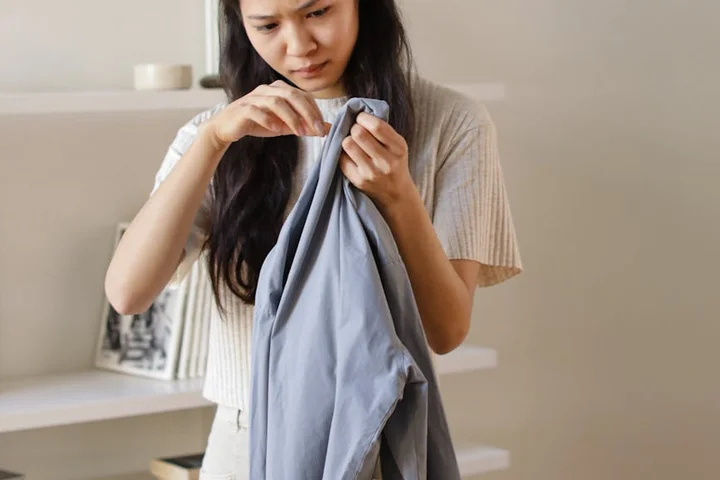
Start with the sniff test. Hold each towel close and take a deep breath.
- Sniff and separate: If you catch that damp, sour scent, pull it out. Make a “problem pile” away from clean laundry.
- Shake them out: Take the smelly towels outside. Give them a firm shake to dislodge any lint or debris.
- Air them out: Drape them over a clothesline or a clean chair in direct sunlight. Let the breeze circulate.
Sunlight absolutely helps remove odors from towels. The UV rays act as a natural disinfectant, killing mold spores that cause the smell.
Do not, under any circumstances, add fabric softener now. It leaves a coating that traps odors inside the fibers. Roger’s hunting towels taught me that lesson, and I’ve had to work even harder to remove bad smells from clothes.
The Vinegar Soak: Your Secret Weapon
Does vinegar remove mildew smell from towels? Yes, it does.
The mild acid breaks down the sticky soap and mineral residue that mildew clings to. It’s like giving your towels a deep, clarifying rinse.
For a standard top-load washer, use 1 cup of plain white vinegar. For a front-loader or a large bucket, 1/2 cup is often enough.
- Fill your washing machine tub or a clean bucket with warm water.
- Pour in the vinegar and swish it around with your hand.
- Submerge the towels completely. Let them soak for 30 to 60 minutes.
- After soaking, you can proceed directly to a wash cycle or drain the bucket and move to the machine.
Never mix vinegar with chlorine bleach. It creates dangerous fumes. Always run a rinse cycle between using these two.
The Baking Soda Boost: Absorbing Odors
Baking soda is a fantastic deodorizer for musty towel odors. It neutralizes smells by balancing pH levels.
Think of it as a sponge for bad scents.
For the wash, add 1/2 cup directly to the drum with your detergent. For spot treatment on visible mold, make a thick paste with a few tablespoons of baking soda and water. For more stubborn stains, use specialized techniques to remove mold and mildew from fabrics.
Rub the paste on the stain, let it sit for 15 minutes, then brush it off before washing.
You can use baking soda in the same wash as detergent, or in a separate rinse cycle after a vinegar soak. My aunt Jessica in Arizona uses one or the other, never both together in the same water.
The Must-Smell-No-More Wash Cycle
This is your full reset. Follow these steps to make sure the smell is gone for good.
- Water Temperature: Use the hottest water your towel fabric allows. Hot water kills mold and bacteria. For cotton, I always use hot.
- Detergent: Choose an enzyme-based detergent or a formula made for athletic wear. These break down the body oils and sweat that feed mildew. I use one that handles Peeta’s muddy adventures too.
- First Wash Cycle: Run a full cycle with the detergent on the hottest setting. Use an extra rinse if your machine has it.
- Second Rinse Cycle: Immediately run another cycle with no detergent. Add 1 cup of white vinegar to the fabric softener dispenser OR 1/2 cup of baking soda directly in the drum.
- Drying: Tumble dry on high heat until completely, utterly dry. Check the center of folded towels for hidden dampness.
A towel that is bone-dry when stored will not develop a musty smell. My mom Martha drills this into me every time she visits from North Texas.
Bleach and Color-Safe Alternatives
Can you use bleach on colored towels to remove mildew? No, you cannot. Chlorine bleach will ruin the dyes and weaken the fibers, especially when removing mold or mildew stains from fabrics.
For white towels, bleach is an option, but I prefer gentler methods.
Natural alternatives to bleach include hydrogen peroxide and oxygen-based cleaners like Oxiclean. They whiten and disinfect without the harshness of traditional chemical cleaners.
- Hydrogen Peroxide (3%): Add 1 cup to the wash cycle. It’s excellent for brightening and odor removal.
- Oxygen-Based Bleach (e.g., Oxiclean): Use the amount recommended on the package, usually one scoop. It works in both hot and cold water.
Always perform a test patch on an inside seam or corner first. I test every time, especially on towels from guests like my son’s friend Edward.
When the Smell Won’t Quit: Deep Clean Tactics

You washed them. You used hot water. But that sour, damp odor clings like a shadow. I have been there. My son Jason’s post-soccer towels used to smell like a locker room even after a cycle. It is frustrating.
Why Do Towels Still Smell After Washing?
Often, the smell is not just on the towel. It is in the towel. The fibers are packed with residue and microbes a normal wash cannot reach.
Detergent buildup, body oils, and hard water minerals create a greasy film that traps mildew spores and odor molecules inside the fibers.
My aunt Jessica from Arizona taught me this. Her water is so hard, her towels felt stiff and always held a faint smell. The wash cycle was just rinsing the surface of a deeply soiled fabric.
The Culprit: Detergent Buildup and How to Strip It
Think of detergent buildup like a layer of sticky wax on each thread. It holds onto everything you are trying to wash away. To get fresh towels, you must strip that layer off, including any leftover soap or detergent residue.
You do not need fancy products. A borax soak is my go-to method for this. Borax softens water, breaks down oils, and is a gentle disinfectant. It is the workhorse my mom Martha has used for decades.
The Rigorous Deep-Clean Protocol
This is for towels that make you wrinkle your nose fresh from the dryer. Set aside an afternoon. You will need:
- Washing machine
- 1/2 cup borax (like 20 Mule Team)
- 1/2 cup washing soda (not baking soda)
- 1 cup distilled white vinegar
- Your regular detergent (no softener!)
- Run the towels on a hot wash cycle with just the borax and washing soda. No detergent yet. This is the stripping cycle.
- When that cycle finishes, immediately start a second hot wash cycle. Add your regular detergent to the drum. Pour the cup of vinegar into the fabric softener dispenser or directly into the drum during the rinse cycle.
- Transfer the towels to the dryer immediately after the cycle ends. Do not let them sit damp. Dry on the highest heat setting the fabric allows.
This two-step attack lifts the grime and then washes it away for good. The vinegar helps dissolve mineral deposits and leaves no lingering smell.
Can You Save Long-Term Mildewed Towels?
Be honest with yourself. If the towels have visible black or gray splotches, or the fibers are literally rotting and falling apart, they are likely too far gone.
For towels with a persistent smell but no physical damage, this deep-clean method has about an 80% success rate in my experience.
I had a set of dark bath towels from a guest bathroom that smelled musty for months. One borax soak later, they were salvageable. But my old camping towels that sat wet in a bag? I had to toss them. The effort to save them was not worth the result.
The Final “Sun Bath” Freshener
If you can, finish the job with sunshine. After drying, hang the towels outside for an hour or two. Ultraviolet light is a powerful natural disinfectant and bleach.
It gives them a crisp, fresh scent no dryer sheet can match. My dog Peeta loves when I do this. He naps on the warm towels while they are on the patio chair.
Keeping Towels Fresh: A New Routine
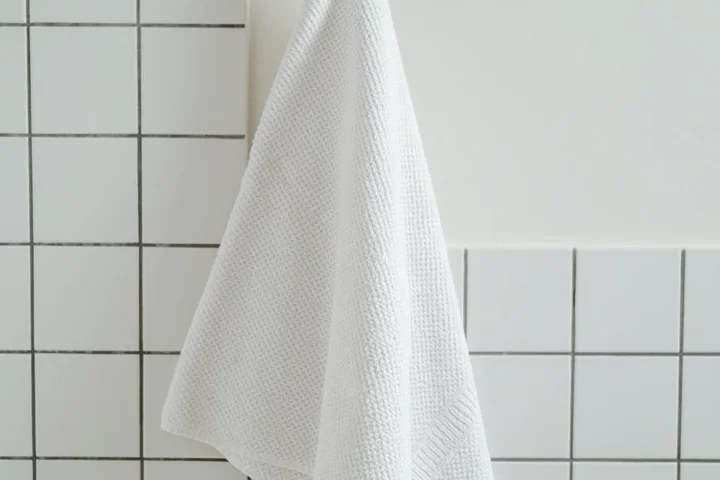
Fixing the problem is one thing. Preventing it from coming back is everything. A few simple habit changes make all the difference.
How to Prevent Towels From Getting Musty
It boils down to two rules: do not let them stay wet, and do not gunk up their fibers. Everything else is a detail.
How Often Should You Wash Towels?
Wash bath towels, hand towels, and washcloths after every 3 to 4 uses.
In our house, that means bath towels go in the hamper twice a week. Hand towels get swapped every other day, especially the one by the kitchen sink. Washcloths are one-use-only items. They go straight to the laundry basket.
Is Fabric Softener Safe for Towels?
No. Avoid liquid fabric softener and dryer sheets for towels.
These products deposit a waxy coating on the fibers to create softness. That coating repels water, making your towels less absorbent. More importantly, it traps odors and bacteria inside the fabric. You are literally sealing the smell in.
For natural softness, use distilled white vinegar in the rinse cycle. It breaks down residues without leaving a coating.
Does Drying Towels Completely Prevent Mildew?
Yes. This is the single most important step. Mildew needs moisture to grow. Take away the moisture, and you stop the problem before it starts.
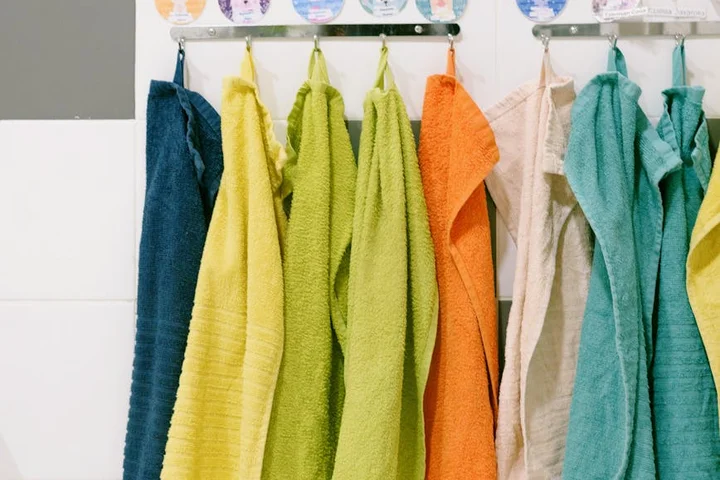
Always hang towels on a bar where air can circulate around them, not on a hook where they get bunched up. If your bathroom is humid, run the exhaust fan for 30 minutes after showers. In a pinch, I will even drape a damp towel over a chair in a well-ventilated room.
Tips for Better Air Circulation and Hanging
- Use towel bars, not hooks. Spread the towel out.
- If you must use hooks, fold the towel over the hook to create more air gaps.
- Do not overload the bar. Towels need space to breathe.
- Ensure your bathroom has a working exhaust fan. Use it.
- On sunny days, air towels outside periodically, even if they are clean. It revitalizes them.
My mother-in-law Brianna from Southern Texas is militant about this. Her guest towels are always perfectly fluffy and fresh. She says a damp towel is an invitation for trouble. She is right.
The Last Resort: When to Say Goodbye
I wish every towel could be saved. Sometimes, though, a towel is just done. You should consider throwing away a smelly towel when the odor returns immediately after a thorough, hot wash, signaling the microbes are too entrenched in the fibers. It’s a tough call, but your nose usually knows best.
Signs the Damage is Permanent
Look for these three clear indicators. If you see them, your towel is likely past the point of no return.
A persistent sour or dank smell that hits you as soon as the towel gets damp is your first major red flag. I learned this from my Aunt Jessica’s guest towels. They smelled fine dry, but the moment you dried your hands, that damp-cellar scent appeared.
The fabric itself changes. It might feel stiff and crunchy, or oddly slimy even after rinsing. This often means the cotton fibers have started to break down and degrade from long-term microbial damage.
Visible stains are a final sign. Look for splotchy black, gray, or dark green spots. These are visible mold colonies, and they indicate the problem has moved from a surface odor to a deep-set infestation. If you see this, especially after cleaning attempts, it’s time.
The Final “Hail Mary” Towel Strip
Before you toss them, try this aggressive stripping method. It’s my last-chance protocol for towels that seem hopeless but don’t have visible mold.
This process uses hot water and strong cleaners to dissolve mineral buildup, oils, and biofilm that trap odor. It works on my husband Roger’s workout towels when nothing else does.
- Fill your bathtub or a large utility sink with the hottest water your tap can produce.
- Add 1 cup of borax, 1 cup of washing soda (like Arm & Hammer Super Washing Soda), and ½ cup of your regular liquid detergent. Swirl to dissolve.
- Submerge the smelly towels completely. Let them soak for 4 to 6 hours, agitating them with a stick (never your hands) every hour or so.
- Drain the tub. You’ll likely see murky, grayish water. Wring out the towels and wash them normally in your washing machine on a hot cycle with an extra rinse.
- Dry them completely in direct sunlight if possible. The UV light is a powerful, natural disinfectant.
Wear gloves and ensure the room is ventilated. This method isn’t gentle, but it’s the final attempt to reset the fibers.
It’s Okay to Start Fresh
If the smell remains after the strip, please don’t feel guilty. You tried. Replacing old, permanently funky towels is not a failure; it’s a choice for better hygiene and personal comfort. I had to do this with a set of bath sheets that just wouldn’t let go of a mildewy smell, and the relief was immediate.
Your daily towel should feel clean and inviting. Sometimes, the most effective solution is a fresh start with new ones.
FAQ About Removing Mildew Smells from Towels
Can you use bleach on colored towels to remove mildew?
No, chlorine bleach will damage dyes and weaken fibers on colored towels. For safe disinfecting and brightening, use a color-safe oxygen-based bleach or hydrogen peroxide instead.
What are some natural alternatives to bleach for whitening and deodorizing?
Oxygen-based cleaners (e.g., OxiClean) and hydrogen peroxide are excellent natural alternatives. They are effective at lifting stains, disinfecting, and removing odors without the harshness of chlorine bleach. Understanding their stain-safety profiles on different fabrics and colors can help when we compare OxiClean vs hydrogen peroxide. In the next steps, we’ll look at safety considerations and practical tips for using each option.
How can the sun help remove odors from towels?
Sunlight acts as a natural disinfectant; its UV rays kill odor-causing mold spores. Hanging towels in direct sun after washing provides a powerful, chemical-free freshness boost.
Why do towels still smell musty immediately after I wash them?
This usually signals detergent or mineral buildup trapping odors inside the fibers. Strip the towels using a borax and washing soda soak to remove this residue before washing again.
What’s the simplest daily habit to prevent musty towels?
Always ensure towels dry completely between uses by hanging them spread out on a bar, not bunched on a hook. A bone-dry towel cannot develop a mildew smell.
Your Routine for Fresh, Odor-Free Towels
After years of battling musty towels from my soccer-loving Jason and mess-maker Jessica, I’ve learned one truth: musty smells can’t take hold if you never let towels stay damp. Make it a habit to spread towels out to dry fully after each shower or hand-washing. For stubborn musty smells in bedrooms or closets, quick drying and improved airflow do wonders. The same tips can help you rid musty smells from those spaces as well. You’ll find more deep-cleaning guides and home-tested methods waiting for you on Stain Wiki.
Written by Suzanne Rosi Beringer. Suzanne is an accomplished chemist, laundry expert and proud mom. She knows the science and chemistry of stains and has personally deal with all kinds of stains such as oil, grease, food and others. She brings her chemistry knowledge and degree expertise to explain and decode the science of stain removal, along with her decades long experience of stain removal. She has tried almost everything and is an expert on professional and DIY stain removal from clothes, fabric, carpet, leather and any other items dearest to you.