Terrazzo Stains? Your Practical Guide to Cleaning and Restoration
Noticed a dull spot or a colorful splash on your beautiful terrazzo floor? For most fresh spills, a prompt blot with a damp microfiber cloth and a pH-neutral cleaner is your safest, most effective first move.
This article will give you my tested, room-by-room methods for keeping terrazzo pristine. Here’s what we’ll cover:
- The daily cleaning routine that prevents most stains from setting.
- Safe, specific techniques for wine, coffee, grease, and more.
- What products to absolutely avoid so you don’t etch the surface.
- How to tackle old, set-in stains without damaging the sealer.
- When a professional deep-clean is the smartest choice.
I’ve cared for terrazzo in my own home and for years as a specialist, learning from mishaps with everything from my dog Peeta’s muddy paws to my aunt Jessica’s prized merlot.
What Stains Affect Terrazzo Floors Most?
Think of a terrazzo floor like a very hard, polished sponge. It’s full of tiny, microscopic holes from where the marble or glass chips are set in the cement or epoxy. These tiny pores are exactly where spills like wine or oil get trapped, leading to a dull, discolored spot. The good news is, a modern sealer usually fills these pores. But on older floors or if the sealer wears down, you’re back to that hard-sponge situation.
The worst offenders fall into a few common, messy categories. You’ve got the colorful organic spills, the sneaky grease blotches, weird orange rust rings, and those frustrating black scuff marks.
Organic Stains: Coffee, Wine, and Food
These are the spills that leave a colored ring or halo behind. Coffee, tea, red wine, berry juice, or even tomato sauce can seep in and deposit their pigments. I learned this the hard way when Aunt Jessica visited. Her cabernet splashed on my kitchen floor, leaving a faint pinkish-purple shadow before I could blot it.
A quick wipe-up on a well-sealed floor often solves it, but if the liquid sits, it will find a way into any unsealed pore. Old terrazzo in entryways or patios is especially vulnerable to these kinds of stains.
Oil and Grease: Kitchen and Workshop Spills
Oil doesn’t just sit on the surface. It soaks in deep, creating a dark, shadowy blotch that often feels slightly tacky. In the kitchen, it’s splattered olive oil or butter. In the garage or mudroom, it’s drips from a bicycle chain or lawnmower.
Roger once left a toolbox with a slightly oily wrench sitting right on the terrazzo landing. Two days later, we had a perfect, greasy wrench-shaped stain. These stains don’t just discolor the floor, they actually darken it because the oil changes how the light reflects off the stone chips.
Rust and Mineral Deposits
These stains are a strange, orange-brown color. They happen when something wet and metal sits on the floor, like a damp patio chair leg, a wet toolbox, or a metal plant pot. The iron in the metal transfers onto the floor.
Hard water can also be a culprit. If you mop and let dirty water puddle and evaporate, the minerals left behind can create dull, chalky spots. It’s not a stain in the traditional sense, but a crusty deposit that masks your floor’s shine.
Physical Marks: Scuffs and Rubber
These aren’t liquid stains, but they can look just as bad. Black marks from shoe soles, rubber toy wheels, or dragging appliances are common. The heat and pressure from the friction literally melt a tiny bit of rubber onto your floor’s surface.
My son Jason’s soccer cleats are the prime suspect in our house. One excited run from the back door to the kitchen and I’ve got a trail of little black crescents to deal with. They don’t soak in, but they stick on tight.
The Gentle Daily Clean: Your Terrazzo’s Best Friend
The absolute best way to handle terrazzo stains is to stop them before they start. People often ask me for the one magic cleaner, but the real secret is a consistent, gentle routine. This simple habit prevents abrasive grit from scratching the sealer and stops spills from becoming permanent guests.
I stick to a two-step process: a dry clean followed by a very careful damp mop. It sounds basic, but doing it right makes all the difference.
Step 1: Sweep or Dust Mop Every Day
Don’t skip this. Grit like sand, dirt, and tiny pebbles act like sandpaper underfoot. Every step grinds them into your floor’s finish, creating microscopic scratches. These tiny scratches then trap more dirt and make your floor look dull faster, and they give spills an easier path into the floor.
I use a soft-bristled broom for larger areas or a microfiber dust mop for a quick daily pass. It takes two minutes and saves hours of deep cleaning later.
Step 2: Mop with a Neutral Cleaner, Not Just Water
Plain water can leave a filmy residue. Instead, use a bucket of warm water with a tiny amount of a pH-neutral floor cleaner. I sometimes use just a single drop of clear, mild dish soap. The key word is “mild.” Temperature can also influence hot and cold water stain removal—hot water can help lift certain stains, while cold water helps rinse and prevent setting. If a stain persists, a quick hot rinse followed by a cold one can be effective.
You must wring out your mop head until it’s just barely damp. Terrazzo, especially older cement-based terrazzo, hates standing water. Puddles can seep into seams and pores, causing damage or etching the surface.
Step 3: The Non-Negotiable Rinse
If you use any soap, even a drop, you must rinse it off. Soap residue is the number one cause of a perpetually dull-looking terrazzo floor. It builds up over time, masking the natural sparkle of the chips.
I keep a second bucket with clean water, or I quickly refill my first bucket after adding cleaner. I go over the floor again with the clean, well-wrung mop. For a streak-free finish, I’ll sometimes follow behind with a dry, clean microfiber towel, especially in high-traffic areas. This final rinse and dry is what gives you that true, clean shine instead of a hazy film.
Targeted Stain Removal: From Coffee to Rust
Every floor has its enemies. For terrazzo, the usual suspects are organic spills, grease, rust, and black marks. I’ll walk you through tackling each one, starting gentle and moving up only if we must. A reminder I give every time: always test your chosen method in a discreet corner, like inside a closet, before applying it to the main stain.
How to Remove Organic Stains Like Coffee or Wine
My Aunt Jessica is a red wine fan. Her last visit left a small, commemorative splash on my kitchen terrazzo. For fresh spills like this, speed is your friend.
- Grab a clean, dry cloth and blot. Don’t rub, just press to soak up the liquid.
- Make a thick paste with baking soda and a little water.
- Spread the paste over the damp spot. Let it sit until completely dry. This can take a few hours. As it dries, it pulls the stain upward.
- Once it’s a powdery crust, sweep or vacuum it up. Dampen a clean cloth with plain water and wipe the area to remove any residue.
For an older, set-in stain that baking soda didn’t lift, a mild oxidizer can help. Dampen a white cloth with water and add a single drop of 3% hydrogen peroxide. Dab it onto the stain, wait just one minute, then rinse thoroughly with a water-dampened cloth. Watch the spot closely. Hydrogen peroxide is very mild, but prolonged contact can sometimes lighten the aggregate or natural stone stains.
Getting Rid of Oil and Grease Stains
My garage entryway terrazzo sees drips from lawnmowers and bicycles. Grease needs a two-part approach: absorb, then clean.
First, cover the spot liberally with cornstarch or baking soda. I keep a shaker of cornstarch in the garage just for this. Let it sit overnight. The powder will turn dark as it soaks up the oil.
Sweep it all up the next morning. You’ll likely see a faint shadow remaining. Now, mix a few drops of clear, mild dish soap (I use Dawn) in a bucket of warm water.
Use this soapy water and a soft microfiber mop to wash the area, then rinse thoroughly with clean water to prevent soapy buildup. The degreasing action of the soap should take care of the residue. For carpets, it’s important to remove any soap residue safely to prevent re-soiling. We’ll cover safe techniques to remove soap residue from carpets in the next steps.
Removing Rust Stains Safely
Rust is tricky. It’s a chemical stain, not a dirt stain. My safest advice is to use a rust remover made for natural stone. Follow the bottle’s directions to the letter. They are formulated to work without damaging the terrazzo matrix.
For a very small, superficial spot, you can try a gentle DIY paste. Mix a little lemon juice with table salt to make a spreadable consistency. Apply it only to the rust stain, not the surrounding terrazzo. Likewise, for rust on concrete surfaces, you can start with the same gentle approach. For tougher stains, a masonry-safe rust remover can be used, followed by thorough rinsing.
Let it sit for no more than five minutes. You must rinse it off completely with plenty of water. This method walks a fine line, as the citric acid can etch the surface if left too long, so use it with extreme caution and always test first.
Lifting Rubber Marks and Scuffs
My son Jason’s soccer cleats used to leave black arcs near the back door. A damp magic eraser is my go-to tool here. These melamine foam erasers are mildly abrasive, so use a light touch.
Dampen the eraser with water, wring it out well, and gently buff the scuff mark. It usually vanishes with a few passes, unlike coffee or ink stains on paper that can be tougher to remove.
Never scrub hard or dry with a magic eraser, as the friction can create a shiny, polished spot that looks different from the rest of your matte or honed floor. If light pressure doesn’t work, stop. A stronger cleaner is not the answer; a professional polisher might be.
Terrazzo Trouble: What to Avoid at All Costs
Fixing a stain feels great. Accidentally causing permanent damage feels awful. This section is about prevention. Heed these warnings to keep your floor’s shine and integrity intact for decades.
Why Acidic Cleaners Etch and Dull Terrazzo
Think of the shiny, smooth surface of your terrazzo as a polished layer of rock. Acids, even weak ones like vinegar, react with the minerals in that stone. This reaction literally dissolves a microscopic layer, leaving behind a rough, dull patch called an etch. It’s not a stain you can clean. It’s physical damage.
Common acidic culprits include:
- Vinegar or any “natural” cleaner with citrus
- Bathroom/grout cleaners with acid formulas (check labels for phosphoric, hydrochloric, or muriatic acid)
- Toilet bowl cleaner
- Some rust removers
Critical Warnings: Never-Use Chemicals and Tools
Alongside acids, a few other products and tools are terrazzo enemies. My mother-in-law, Brianna, once used an abrasive scrub pad on a stubborn spot. It left a network of fine scratches that forever caught the light wrong.
- Abrasive Pads & Steel Wool: These scratch. Even “gentle” scouring pads are too harsh.
- Ammonia & Bleach-Based Cleaners: These can chemically burn or discolor the terrazzo binder and aggregates.
- All-Purpose Cleaners with Unknown Acids: If the label isn’t crystal clear about being safe for natural stone, assume it’s not.
These harsh tools and chemicals will scratch or chemically burn your terrazzo, making the surface more porous and future stains more likely.
Fixing Etching or Dull Spots from Harsh Cleaners
If you discover a dull, etched spot, don’t panic. Very light etching can sometimes be polished out with a terrazzo-specific polishing compound. You can find these at hardware stores. It’s a bit like buffing a fine scratch out of a car’s clear coat.
Apply the compound with a soft cloth and a lot of elbow grease, following the product directions. For a large area or deep chemical damage, the best course is to call a professional terrazzo restoration service. They have industrial-grade diamonds and powders to refinish the floor evenly. It’s an investment, but it can make severe damage vanish.
Your Terrazzo Cleaning Toolkit: Tools and Safe Homemade Mixes

I get a lot of questions about what you actually need to clean terrazzo without ruining it. The good news is you don’t need a closet full of expensive gear.
You just need the right, gentle tools and mixes that respect the floor’s delicate seal.
Best Tools for Scratch-Free Cleaning
Think of your terrazzo like a nice car finish. You wouldn’t scrub it with a stiff brush. Your goal is to lift dirt, not grind it in.
Here is what I keep in my own cleaning caddy for our terrazzo-floored sunroom:
- Microfiber Flat Mop and Pads: This is my absolute favorite. The pads grab dust and grime without needing much pressure. I have a stack of them so I can swap out a dirty one mid-clean.
- Soft-Bristle Push Broom: For daily sweeps, a broom with gentle, flagged bristles gets up the sand and dog hair (thanks, Peeta) without a scratch.
- Plastic Putty Knife: Perfect for gently lifting dried gum, wax, or paint splatters. The plastic edge won’t score the surface like metal can.
- Spray Bottle: For spot-cleaning a juice spill or applying a homemade solution directly to a stain. It gives you control.
Let’s talk about floor buffers for a second. They can be amazing for polishing, but only if you know what you’re doing. Using the wrong pad or too much pressure can permanently dull or “burn” the finish. Unless you’re experienced, leave deep polishing to the pros.
Safe Homemade Cleaning Solutions for Terrazzo
My mom Martha taught me that the simplest solutions are often the best. Harsh cleaners can strip the protective sealant right off your floor, leaving it vulnerable.
These two mixes have never let me down:
- The Daily Cleaner: One gallon of warm water mixed with one teaspoon of clear, mild dish soap (like Dawn Original). It cuts light grease and dirt without leaving a filmy residue.
- The Gentle Scrub for Stains: A paste made from baking soda and a little water. For a rust spot from a wet plant pot or a scuff mark, this provides just enough abrasion. Apply with a soft cloth, rub gently in a circle, and rinse.
These household staples are effective and won’t damage your floor’s sealant or finish. I use them weekly and my floors still have a beautiful, consistent shine.
Surface Compatibility: A Quick Care Comparison
It helps to think about how terrazzo care differs from other things you clean.
- Carpet: You attack stains with enzyme cleaners or oxiclean to break down organic matter deep in the fibers.
- Clothing: A stain pen works by using solvents and surfactants to lift the spill from the thread.
- Upholstery: Foam cleaners are key because they minimize soaking and prevent water stains on the fabric.
- Ceramic Tile: You can often use stronger acids or abrasives because the glaze is very hard.
Terrazzo is different. That marble or glass chip surface is held together with a cementitious or epoxy matrix that can be etched by acids and stripped by strong alkalines. Terrazzo needs the gentlest, most pH-balanced approach of all hard surfaces.
When Stains Won’t Budge: Tackling Old and Set-In Marks
Sometimes, a stain laughs at your soapy water. My husband Roger once left an old motor oil drip in our garage for months before I noticed the dark, greasy spot and had to figure out how to remove motor oil stains from the concrete.
I won’t lie, it took patience. But with the right method, even deep stains can often be pulled out.
Assessing the Stain: Is It Deep or Surface?
First, do a simple test. Clean the area with your mild soap and water mix. Dry it completely.
Does the stain look noticeably lighter? If yes, it’s probably on the surface and will come up with repeated gentle cleaning. If the stain looks exactly the same once dry, the problem has likely penetrated beneath the seal. That’s when you need a more advanced tactic.
Advanced Home Methods: Poultices for Pulling Stains Out
This is your secret weapon. A poultice is a thick paste that you spread over a stain. As it dries, it acts like a magnet, pulling the stain material up and out of the pores of the stone.
The recipe changes based on what caused the stain:
- For Organic Stains (coffee, tea, wine, fruit): Make a paste with baking soda and 3% hydrogen peroxide. My aunt Jessica swears by this for red wine.
- For Oil-Based Stains (cooking oil, grease, motor oil): Use a powdered clay like kaolin (available online or at craft stores) mixed with water to a peanut butter consistency.
Here’s how you do it:
- Apply the paste about 1/4 inch thick over the stain, extending an inch past its edges.
- Cover it completely with plastic wrap. Tape down the edges. This slows drying and lets the poultice work.
- Let it dry completely. This can take 24 to 48 hours. Walk away.
- Once it’s hard and crumbly, scrape it off with that plastic putty knife. You may need to repeat the process for very old stains.
When to Call a Professional Terrazzo Cleaner
There’s no shame in calling for backup. I did for a huge, mysterious dark patch in our old kitchen that I later learned was from a decades-old leak.
Consider a pro if:
- The stain covers a very large area.
- It’s clearly decades old and all poultice attempts fail.
- You’re dealing with unknown or potentially hazardous chemicals.
Professional cleaners have industrial diamond abrasives, powerful wet vacuums, and commercial-grade sealants we can’t access. They can often restore floors we think are lost causes, and it’s usually worth the investment for a permanent fix.
Keeping Terrazzo Pristine: Sealers and Smart Habits
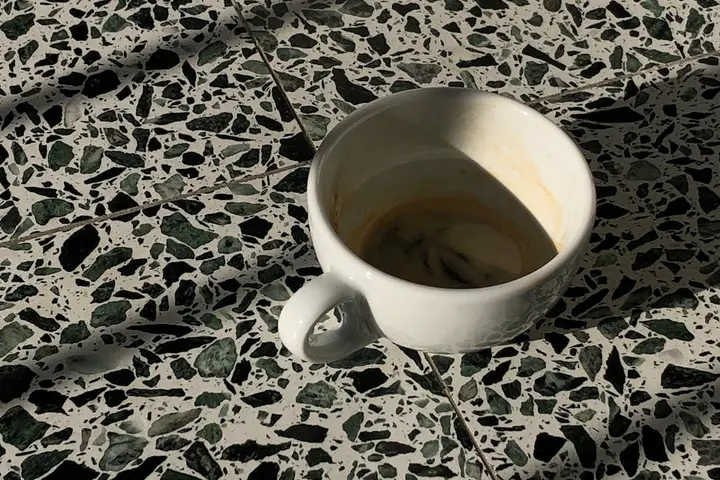
Think of this as your terrazzo’s permanent stain prevention plan. After a red wine incident with Aunt Jessica, I stopped just cleaning stains and started preventing them.
Sealing your floor and building smart daily habits is the ultimate strategy. It saves you from frantic scrubbing later.
Why Sealing Terrazzo is Non-Negotiable
Terrazzo looks smooth, but it’s actually porous. Those tiny holes can soak up spills like a sponge.
A quality sealer fills those pores, creating a shield that makes liquids bead up instead of soaking in.
I always recommend a penetrating, impregnating sealer for terrazzo. It sinks deep into the stone instead of just coating the top.
Not sure if your floor is sealed? Test it. Find a hidden spot in a closet and sprinkle a few water drops.
If the water beads and sits on the surface, you’re good. If it darkens the stone and gets absorbed, it’s time to seal.
How Often to Reseal and High-Traffic Care
For a typical home, plan to reseal every one to three years. High-traffic areas are a different story.
Our front entryway, where Peeta and the kids come in from outside, needs a fresh coat every single year.
A fresh sealant is your best defense against stains in busy areas.
In these zones, dry dusting is your daily friend. I use a microfiber mop to pick up abrasive grit before it can wear down the seal.
Spills demand instant attention. When Jason’s teammate Edward spills a sports drink, we wipe it before it even thinks about staining.
Preventing Stains with Simple Daily Habits
Your daily routine is the frontline defense. Here are the habits that work in my house.
- Use thick walk-off mats at every door. They catch dirt and moisture from shoes and paws.
- Clean spills immediately. Keep a dedicated terrazzo cleaning cloth handy for juice, coffee, or sauce.
- Put felt pads on all furniture legs. Roger’s heavy chair taught me this lesson the hard way.
Our most important rule is no outdoor shoes indoors. We started this after Peeta’s muddy adventures.
Now, shoes come off at the door, especially after a rainy soccer game. It keeps the terrazzo pristine for everyone.
FAQ about Terrazzo Stain Removal and Care
What protective sealers are recommended for terrazzo, and how often should they be applied?
Use a penetrating, impregnating sealer designed for natural stone. For most homes, plan to reseal every 1-3 years, but test a hidden area with water droplets yearly; if the water soaks in instead of beading, it’s time.
Are there any homemade cleaning solutions that are safe for terrazzo?
Yes, for daily cleaning, mix one teaspoon of clear, mild dish soap with one gallon of warm water. For spot-cleaning, a paste of baking soda and water is safe-just rinse thoroughly to avoid residue.
How should you clean terrazzo floors in high-traffic commercial areas?
Implement a daily dry dust-mop to remove abrasive grit, and clean spills instantly with a pH-neutral cleaner. These areas will require more frequent sealing, often annually, to maintain the protective barrier.
How do you handle deep-set or old stains that regular cleaning won’t remove?
Apply a poultice-like baking soda mixed with hydrogen peroxide for organic stains—cover it with plastic wrap, and let it dry completely to pull the stain out. You may need to repeat this process for very old marks, especially when trying to remove furniture marks and stains from carpets.
How do you address etching or dull spots caused by harsh chemicals?
For very light etching, you can attempt to polish the spot with a terrazzo-specific polishing compound and a soft cloth. For any significant or widespread dulling, call a professional restoration service to refinish the floor evenly.
Smart Habits for Stain-Free Terrazzo
If you remember just one thing, make it this: address spills the moment they happen with a gentle, pH-neutral cleaner to stop stains from becoming permanent. I share all my floor-cleaning trials, from Jason’s soccer mud to Aunt Jessica’s wine spills, right here on the blog for your next home challenge.
Written by Suzanne Rosi Beringer. Suzanne is an accomplished chemist, laundry expert and proud mom. She knows the science and chemistry of stains and has personally deal with all kinds of stains such as oil, grease, food and others. She brings her chemistry knowledge and degree expertise to explain and decode the science of stain removal, along with her decades long experience of stain removal. She has tried almost everything and is an expert on professional and DIY stain removal from clothes, fabric, carpet, leather and any other items dearest to you.