How Do You Get Mud Stains Out of Clothes and Shoes? A Step-by-Step Guide for Fresh and Dried Mud
That sinking feeling when mud splatters your clothes or shoes is all too familiar in my house. Don’t panic-the best first step is often to let the mud dry completely, then gently brush off the crust before any washing.
I’ll walk you through my proven process, covering why you should never rinse fresh mud right away, the safest way to pre-treat different fabrics, how to clean leather sneakers versus canvas shoes, my go-to homemade solution for set-in stains, and key mistakes that can make the stain worse.
My advice comes from years of hands-on tests, from cleaning Jason’s soccer kits to salvaging Roger’s work jeans after a rainy day in the yard.
Panic-Level Assessment: How Bad Is a Mud Stain?
On my personal panic scale, a fresh mud stain is only a 3.
It’s a common mess. I see it weekly with Jason’s soccer gear or Peeta’s muddy paws.
Mud is more of a nuisance than a disaster, but timing is everything.
The “Golden Window” is that first hour while the mud is still wet.
In this window, the stain is soft and hasn’t bonded deeply to the fibers.
Dried mud is a different story. I’d bump the panic level to a 6.
When it dries, the clay hardens. It acts like a brittle glue locking dirt into the fabric.
Even a crusty, dried mud stain is usually removable with the right approach.
Last Tuesday, Jason slid into home plate during a rainy game.
His white pants were coated in thick, brown mud. We had a golden window to work with.
Chemistry Corner: What Makes Mud Such a Stubborn Stain?
Mud isn’t just dirt. It’s a composite stain with two main parts.
First, you have the dirt itself. This is mostly fine clay particles and minerals.
Second, there’s organic matter. Think of decaying grass, leaves, or even manure.
Understanding these two components explains why mud acts the way it does.
The clay is the real troublemaker. Its tiny, flat particles are like microscopic plates.
When wet, they slide easily. When they dry, they bind tightly to fabric fibers.
It’s like a natural mortar setting between the threads of your clothes.
The organic matter can behave like a dye. As it dries, it can leave a yellowish or brownish tint.
This is why sometimes after washing out the dirt, a faint stain remains.
Your laundry detergent is designed to break this bond.
Detergents contain surfactants. These are clever molecules that love water and hate grease.
They surround the dirt particles, loosening their grip on the fabric so water can rinse them away.
Think of mud as nature’s paste. Water and dirt mix to form a temporary glue.
Your job is to dissolve that glue before it cures. Detergent and water are your best tools.
First Aid for Fresh Mud on Clothes: Your Step-by-Step Rescue Plan

How do you remove fresh mud stains from clothes? I get this question a lot, especially from parents like me after a rainy soccer practice. My first rule is simple: treat them while they are fresh.
Never rub a fresh mud stain. Rubbing grinds the gritty particles into the fabric fibers, making the stain worse and harder to lift out.
Think of it like pushing dirt into carpet. Instead, follow this calm, methodical plan. It works on everything from Jason’s soccer shorts to Roger’s work pants.
Step 1: Let It Dry or Scrape? The Initial Decision
You might think letting mud dry makes it easier to brush off. Sometimes it does, but with clothes, you risk setting the stain. I always scrape. That is one of those laundry myths that you should be careful about.
Gently scrape off the wet, gloppy excess with the back of a butter knife, an old gift card, or any dull edge.
Hold the item over a trash can or outside. This removes the bulk of the problem before it soaks in deeper.
Step 2: The Backward Rinse – Your Secret Weapon
Here’s a trick I learned from my mom, Martha. Always rinse a stain from the backside of the fabric.
Hold the stained area under cool, running water with the inside of the garment facing the stream. This pushes the stain out the way it came in, instead of forcing it through the fabric.
Use cool or lukewarm water. Hot water can cook proteins or minerals in the dirt, turning a mud stain into a permanent, dull brown shadow.
Step 3: Pretreat with Your Detergent Arsenal
After rinsing, you’ll likely see a damp, dirty shadow. Now it’s time for your pretreatment. My go-to is a simple paste.
- Squeeze a dollop of liquid laundry detergent directly onto the stain.
- Gently work it in with your fingers or a soft toothbrush to create a thick paste.
- Let this sit for 15 to 30 minutes. The enzymes in modern detergents need time to break down the organic matter in the mud.
For white clothes, I add an extra step right here. I make a separate paste with a powder like OxiClean and a few drops of water, then dab it over the detergent. This oxygen-based bleach boosts the cleaning power for bright whites without the harshness of chlorine bleach. It’s especially effective on collar stains on white dress shirts.
Step 4: The Wash Cycle – Settings That Matter
Don’t just toss it in with a regular load. Wash the garment by itself or with other similarly soiled items.
Use the heaviest soil setting and the warmest water temperature the care label allows. This gives the detergent more agitation and time to work.
After the wash, check the stain area before you even think about the dryer. If any trace remains, air dry the garment and repeat the pretreatment. Heat from a dryer will set any leftover stain for good.
Rescuing Clothes from Dried Mud: Patience and Gentle Persuasion
How do you remove dried mud stains from clothes? We’ve all been there. I found one of Jason’s favorite jerseys balled up in his gym bag three days after a muddy game. It was stiff as a board. Don’t panic. Dried mud needs a softer touch, especially for white jerseys and delicate fabrics.
Patience is your most important tool here. You can’t rush this process without risking damage to the fabric.
Step 1: The Gentle Crumbling Phase
Take the garment outside or over a large trash can. You don’t want dust everywhere. Gently flex and bend the fabric.
Let the dried mud crack and crumble off on its own. For sturdier fabrics like denim, you can use a soft-bristled brush (an old dry toothbrush works) to help loosen particles.
Avoid vigorous scraping, especially on knits or delicate fabrics. You’re just encouraging the dirt to let go, not attacking it.
Step 2: The Soaking Session That Changes Everything
Once most of the loose dirt is gone, you’ll see a set-in stain. This is where soaking makes all the difference.
- Fill a sink or bucket with cool water.
- Add a scoop of oxygen-based bleach (like OxiClean) or a generous pour of liquid detergent. Swirl to dissolve.
- Submerge the garment and let it soak for several hours, or even overnight.
For really stubborn, clay-like mud from certain areas, my mom Martha uses a vinegar soak. If the stain has a mineral quality, a cup of white vinegar in the soak water can help dissolve those deposits without harming colors.
Step 3: Targeted Treatment for Lingering Shadows
After the long soak, check the stain. If a faint shadow remains, apply a liquid enzyme stain remover or more liquid detergent directly to the spot.
Massage it in gently, let it sit for another 15 minutes, then wash the garment again on a warm, heavy-duty cycle.
Repeat the crucial step: air dry and check. You may need to do this twice for old, set-in mud.
Special Case: How Do You Get Mud Stains Out of White Clothes?
White fabrics show every trace. Oxygen-based bleach is your best friend here, not chlorine bleach which can yellow some synthetics. Especially when removing yellow stains from white clothes.
After the initial soak, make a thick paste of oxygen bleach powder and water. Apply it directly to any remaining stain and let it sit for an hour before washing.
This targeted boost often lifts that last bit of dingy gray from white soccer socks or t-shirts.
Cleaning Mud From Shoes: Fabric, Leather, and Everything Between
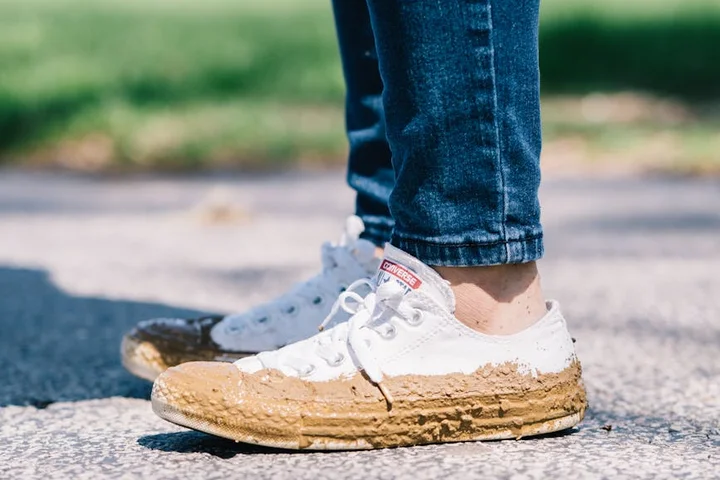
You just got home and see the trail of muddy footprints. How do you clean mud from shoes? I hear this all the time from my son Jason’s soccer buddies.
Can the same methods be used for both clothes and shoes? The core idea is similar for fabrics, but shoes have structure and different materials that need extra care. I always start by checking what the shoe is made of.
Fabric and Canvas Shoes: Almost Like Clothing
Let the mud dry completely first. Trying to clean wet mud just smears it around. I learned this after Jessica’s little canvas sneakers turned into a brown mess.
Use a stiff brush, like an old dish brush, to knock off all the dried, crumbly dirt.
Pretreat any remaining stains with a drop of liquid laundry detergent, rubbing it in gently with your fingers.
If the shoes are simple fabric without much glue or stiffening, you can toss them in a mesh laundry bag and wash on cold. For most shoes, hand scrubbing is safer.
I use an old toothbrush and cool water to scrub the pretreated areas. Machine washing can break down the adhesives that hold the shoe together, so it’s better to treat stains on all types of shoe materials manually.
Leather and Suede Boots: A More Delicate Touch
My husband Roger’s hunting boots taught me this lesson. Patience is everything with leather. Let the mud dry fully, even if it takes a day.
Once dry, brush off all the loose dirt with a soft, dry brush. For suede, use a suede brush or a clean, dry toothbrush to lift the nap.
For a stubborn stain on smooth leather, use a cloth dampened with water and the tiniest bit of saddle soap.
Wipe the leather gently and dry it immediately with a towel. Never, ever soak leather boots or use harsh chemical cleaners, especially when dealing with water stains on leather.
Soaking can cause the leather to warp and crack. I keep Roger’s boots conditioned with a simple leather cream after cleaning.
Shoe Insoles and Laces: Don’t Forget the Details
Always remove the laces. I soak them in a bowl of warm water with a squirt of dish soap while I clean the shoes.
For removable insoles, pull them out to air dry. If they develop a sour smell, a light spray of a mild disinfectant works wonders.
My Aunt Jessica from Arizona once washed a whole shoe with the laces still in, and they tangled terribly. Now I always take them out first.
Beyond Clothes and Shoes: Mud on Car Interiors, Carpets, and Hard Surfaces

Mud doesn’t stop at the doorstep. From car seats to driveways, here’s how I handle the spread.
Car Upholstery and Carpets: Blot, Don’t Scrub
Let dried mud on car carpets or seats become your friend. Use a stiff brush to loosen it all up, then vacuum every bit you can.
For a stained patch, mix one part white vinegar with two parts water and test it on a hidden seam.
Blot the stain with the solution using a clean cloth. Scrubbing will grind the dirt deeper into the fabric.
For car mats, I use the hose attachment on my carpet shampooer. It injects clean water and sucks up the dirty water, pulling the mud right out.
Hard Surfaces: Driveways and Floors
The method here is beautifully simple. Let the mud patch on your driveway or garage floor dry to a light gray color.
Sweep up the bulk with a stiff broom. Then, rinse the area with a garden hose.
For stuck-on dirt, use a push broom with some soapy water. My mom Martha in North Texas uses this for her tile patio.
Pressure washers can work, but they can also damage softer concrete or wood, so I use them as a last resort.
A little elbow grease with a brush is often all you need. It’s safer for your surfaces.
What Should You Avoid Doing? Common Mistakes That Set Stains
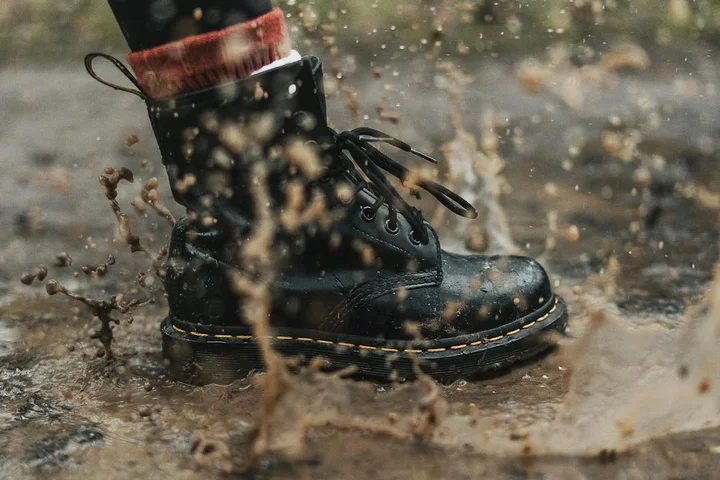
Here’s the FAQ I get most: “What should you avoid doing when treating mud stains?” Let me save you some heartache. I’ve made these mistakes myself, usually when rushing to clean up after Jason’s soccer game or Peeta’s backyard adventures.
The most common error is scrubbing or rubbing fresh mud the moment you see it. That wet, gritty paste gets ground deep into the fabric fibers. It feels productive, but it’s the opposite.
I learned the hard way with hot water. My mom, Martha, drilled this into me. Never start with hot water on a fresh mud stain. Mud isn’t just dirt. It often contains organic matter and proteins. Hot water cooks those onto the fabric, turning a simple smudge into a permanent, dull brown shadow.
This one is a true tragedy. Never, ever put a mud-stained item in the dryer until you are 100% certain the stain is gone. The heat will permanently set any leftover residue. I check twice. Air dry only until you’re sure.
Finally, don’t reach for harsh chemicals out of frustration. Avoid bleach or ammonia on colored fabrics without testing first. They can strip color or cause ugly yellowing. My rule is to always test in a hidden seam first, like the inside of a cuff—especially when dealing with dye stains on clothes.
Keeping Mud at Bay: Smart Prevention for Active Households
Prevention is about simple systems, not a spotless home. We live here, and mud is part of our story.
My first line of defense is right by the door. I keep a sturdy boot scraper and a stack of old towels in a basket on the porch. Peeta knows the drill. He gets a quick paw wipe before he’s allowed to sprint for his food bowl. Roger uses the scraper for his work boots.
For clothes and gear that see regular action, a fabric protector spray is a game-changer. I treat Jason’s soccer jackets and our good hiking shoes with a protector spray at the start of each season. It doesn’t make them magically stain-proof, but it gives you a few crucial seconds to blot before the mud soaks in.
This is my sanity-saver. Jason and Jessica have designated “play clothes” for muddy or messy activities. It removes the anxiety. When Edward comes over after a rainy game, I don’t worry about his uniform. We just swap it for old sweatpants.
The simplest trick is often the best. A quick rinse under the garden hose or in a bucket of water outside can stop a mess before it starts. We rinse soccer cleats and gardening shoes outside. It washes the bulk of the mud away so you’re only dealing with dampness, not clods of dirt, at the door.
FAQ About Removing Mud Stains
My jeans are covered in wet mud from the garden. What’s the absolute first thing I should do?
Let the mud dry until it’s just damp, then gently scrape off the excess with a dull edge like a butter knife. Immediately rinse the stain from the inside of the fabric with cool water to push the dirt back out.
I found a dried mud-caked shirt days later. How do I start without damaging the fabric?
Take it outside and gently flex the fabric to let the dried mud crumble off; use a soft brush on sturdy fabrics like denim. Avoid any aggressive scraping or pulling, especially on knits or delicate materials.
Can I use vinegar to clean mud off my suede boots or leather shoes?
No, avoid vinegar on suede or leather as it can damage the material. For smooth leather, use a barely damp cloth with a tiny bit of saddle soap, and for suede, only use a dry suede brush after the mud is completely dry. For a fuller overview, our suede nubuck smooth leather cleaning guide covers all the basics.
I pretreated and washed a mud stain, but a faint shadow remains. What now?
Do not put the item in the dryer, as heat will set the remnant stain permanently. Re-treat the area with a stain remover or detergent paste, let it sit, and wash it again, checking the stain after air drying.
Is dish soap a safe alternative to laundry detergent for pretreating mud?
Yes, a drop of clear dish soap can be effective for pretreating mud on both clothes and fabric shoes, as it helps break down oily components. Always rinse thoroughly and follow with a normal wash using laundry detergent for the best cleaning power.
Keep Your Gear Ready for the Next Adventure
Your most powerful tool for mud is patience. Let the mud dry completely first, then brush it off before any fabric sees water. Trust this process, and you’ll save yourself from grinding a permanent stain into the fibers. I follow this rule every time Jason and Peeta come barreling in from the yard, and it hasn’t failed me yet.
For more specific stain battles and home-care wisdom, I share all my tests and family-proof methods right here on the blog.
Written by Suzanne Rosi Beringer. Suzanne is an accomplished chemist, laundry expert and proud mom. She knows the science and chemistry of stains and has personally deal with all kinds of stains such as oil, grease, food and others. She brings her chemistry knowledge and degree expertise to explain and decode the science of stain removal, along with her decades long experience of stain removal. She has tried almost everything and is an expert on professional and DIY stain removal from clothes, fabric, carpet, leather and any other items dearest to you.