How to Remove Yellow Stains and Discoloration from White Clothing, Shirts, Bedding, and Pillows?
Yellow stains on your crisp white sheets or favorite tee can feel like a permanent defeat, but don’t despair. With the right approach, you can almost always restore that bright white look using common household items like baking soda or oxygen bleach.
This article gives you my proven, step-by-step plan, tested on everything from Jason’s soccer uniforms to our family’s pillowcases. Here’s what we’ll cover:
- The real reasons white fabrics develop yellow stains and dullness.
- Specific methods for clothing, bedding, and pillows to avoid damage.
- How to tackle different stain causes, from sweat to sunscreen.
- My go-to routines to prevent yellowing from happening again.
I’ve spent years as a stain removal specialist, personally testing these methods in my own busy household.
The Yellow Stain Panic-Level: What’s Your Time Window?
On my personal stain panic scale, I give yellowing a 4 out of 10. It’s not a blood or ink emergency. You can finish the laundry load, put the kids to bed, and then deal with it.
The real trick is knowing that yellow stains have a long but deceptive “golden window” for treatment. A stain that’s a week old might come right out. One that’s been baked into a pillow for a year becomes a much tougher opponent.
Think of my son Jason’s soccer jersey, damp with sweat from yesterday’s game. That’s a fresh, oily stain. My husband Roger’s favorite work shirt collar, yellowed from a whole season of wear? That’s the set-in enemy we’re talking about.
What’s Turning Your Whites Yellow? (It’s Usually Not Just One Thing)
Yellowing is a team effort. One villain rarely works alone. Here are the usual suspects I see all the time:
- Body Oils & Sweat: This is the big one. My son Jason’s athletic tees and Roger’s shirt collars and cuffs are ground zero. Oils from skin and hair, like where my dog Peeta loves to nap on a white pillowcase, soak into fibers.
- Detergent Residue: Using too much soap or a poor rinse cycle leaves a film. This sticky film traps dirt and oils, making fabrics look dingy and gray-yellow over time.
- Hard Water Minerals: If your water has lots of calcium and magnesium, those minerals bind with soap and soils. They leave behind a crusty, discolored deposit. My mom Martha in North Texas fights this constantly.
- Fabric Aging: Some white synthetics and finishes can naturally yellow with age and exposure to light, just from oxidation.
Chemistry Corner: This is why your usual laundry routine often fails. That fresh sweat stain is an oil. Over weeks and months, it oxidizes-it essentially “rusts” in the fabric. That’s why yellow stains need an oxidizer to break them apart. Think of hydrogen peroxide or oxygen bleach (like OxiClean) as a gentle solution that reverses that rusty chemical change.
Material Red Flags: Fabrics and Treatments That Need Extra Care
Not all whites are created equal. Before you grab any treatment, pause.
Always, always check the care label first. It’s your roadmap. A “dry clean only” silk blouse needs a completely different approach than a cotton tee.
Be extra gentle with:
- Silk and wool
- Delicate lace or embroidery
- Some performance synthetics with special moisture-wicking coatings
- Any fabric labeled “no bleach” or with unclear care instructions
My one non-negotiable safety rule: Never, ever mix chlorine bleach with ammonia or vinegar. This creates toxic, dangerous gases. Pick one path and stick with it. If you’re unsure, use an oxygen-based bleach-it’s much safer for most fabrics and your home.
Your First-Aid Kit for Yellow Stains: Safe Pre-Treatments
When you spot that first dull yellow ring, don’t panic. Grab a clean white cloth and gently blot. You’re not scrubbing. You’re lifting any fresh moisture away. My son Jason’s white soccer socks taught me this. A frantic rub just grinds the sweat and dirt deeper into the fibers.
Your very first move should always be a gentle blot followed by a cool water rinse from the back of the stain.
Turn the fabric inside out if you can. Run cool water through the stain from the back side. This pushes the staining agents out the way they came in, not deeper. For a pillowcase or sheet, I’ll hold the stained area under a slow, cool tap stream. This technique is especially useful when trying to remove biological stains from fabric.
Why Hot Water is Your Enemy Here
This is the rule I learned the hard way with my husband Roger’s old undershirts. Hot water is fantastic for many stains, but not for the body oils and sweat that cause most yellowing.
Think of body oil like bacon grease. If you pour hot water on a greasy pan, the grease liquefies and spreads. It’s the same with the oils in a yellow stain. Hot water can actually cook those oils into the fabric, setting the stain permanently.
Always use cool or lukewarm water for that initial rinse to keep body oils from setting into a permanent, waxy stain.
The Non-Negotiable: The Hidden Seam Test
Before you apply any treatment, even a natural one, you must do a test. My Aunt Jessica, a red wine enthusiast, drilled this into me. A remedy that works on cotton might melt a polyester blend. For red wine stains on clothing, a quick test on an inconspicuous spot can prevent setting the stain or damaging the fabric. Those fabric quirks make testing essential.
Find a hidden seam, an inside hem, or the underside of a collar. Apply a small dab of your chosen pre-treatment. Wait 5-10 minutes, then blot with a cool, damp cloth.
Check for two things: color change (like fading or dye transfer) and fabric integrity (is it turning gummy or rough?). If anything seems off, try a different spot with just water. That test patch has saved my kids’ delicate pajamas more than once.
- Find a hidden seam or inside hem.
- Apply a dime-sized amount of your cleaning solution.
- Wait, then rinse and check for damage before proceeding.
How Can You Get Yellow Out of White Clothes? 5 Tried-and-True Methods
You look at that favorite white shirt and see a dull yellow shadow. I get it. Here are five methods I use to bring the bright back.
Method 1: The Oxygen Boost (Hydrogen Peroxide or Oxygen Bleach)
This is my first stop for yellowing. It’s gentle but powerful.
For a targeted stain, grab your 3% hydrogen peroxide. Spray it directly on the yellow area until it’s saturated. Let it sit for 30 minutes. Then, wash as usual with cold water.
For a whole load of dingy whites, I use oxygen bleach like OxiClean.
Fill your washer with hot water, add the oxygen bleach powder according to the package, let it dissolve, then add your clothes for a one-hour soak before running the cycle.
Oxygen bleach is less harsh than chlorine but still lifts stains beautifully.
Just last week, I revived a pile of Jessica’s old white socks. They had a grayish-yellow tint from playtime. A scoop of oxygen bleach in a warm soak made them look new again.
Method 2: The Natural Soak (White Vinegar and Baking Soda)
My Aunt Jessica in Arizona swears by this for her nice table linens. The key is to use them one after the other, not mixed together.
Mixing them in a bowl just makes salty water. You want their full power.
- Fill a bathtub or large basin with the hottest water your fabric can handle.
- Add two cups of white vinegar and submerge your bedding or clothes. Soak for one hour.
- Drain the tub. Refill it with fresh hot water.
- Now, add one cup of baking soda, stir to dissolve, and soak for another hour.
- Finish with a regular wash cycle.
The vinegar breaks down the stain, and the baking soda washes it away while deodorizing.
It’s perfect for items where you’re nervous about any bleach.
Method 3: The Heavy-Duty Scrub (Paste of Baking Soda, Hydrogen Peroxide, and Dish Soap)
Yellow ring around the collar? This paste is your best friend. I use it on Roger’s work shirts all the time.
Here is my exact recipe. Mix two parts baking soda to one part 3% hydrogen peroxide. Add a small squirt of clear dish soap. Stir until it’s a spreadable paste.
Slather this paste onto the stain and let it sit for at least an hour, or even overnight for tough stains.
The dish soap cuts body oil, the peroxide bleaches the discoloration, and the baking soda provides a gentle scrub.
I use an old toothbrush, the one I keep under the sink for cleaning, to work the paste into the fabric fibers before washing.
Method 4: The Laundry Booster (Borax or Washing Soda)
Sometimes the problem isn’t a spot. It’s overall dullness. Hard water minerals can bind to fabric and cause a yellow film.
My mom Martha in North Texas taught me this. Add half a cup of borax to the drum of your washer with your regular detergent.
Run a hot wash cycle if the fabric allows it.
Borax softens the water, which helps your detergent work better and rinse away completely, taking that dingy layer with it.
It’s a simple upgrade for every white laundry load.
Method 5: Chlorine Bleach – The Last Resort
I only use this when nothing else works. Chlorine bleach can weaken fibers over time.
Always dilute it. For a standard washer, add no more than ¾ cup of bleach to the bleach dispenser. Never pour it directly onto clothes.
Check the care label first. Bleach will ruin elastic, spandex, wool, or silk.
Try every other method on this list first to keep your white clothes strong and bright for longer.
When I do use it, I make sure the room is well-ventilated and I wear gloves. Safety is non-negotiable.
The Surface Compatibility Guide: Adapting Your Attack
Not every white fabric needs the same treatment. A thin cotton tee requires a different touch than a thick bath towel. For yellow armpit stains on white shirts—or even bedding—the approach changes by fabric. This quick guide helps you tailor the method from shirts to sheets. Here is your quick-reference list for targeting yellow stains on different items.
| Item | Best Approach | My Key Tip |
|---|---|---|
| Clothing & Shirts | Direct paste application | Target only the stained areas to preserve fabric. |
| Bedding & Pillowcases | Large-scale soaking | Use your bathtub for a full set of sheets. |
| Whole Pillows | Machine wash with oxygen bleach | Check the care label first, every time. |
| Canvas Shoes, Towels | Adjusted paste or soak | Be gentle on textures and drying. |
Clothing & Shirts: The Direct Approach
For a single shirt with yellow underarm rings or a collar, I go straight for a paste. My son Jason’s white soccer jerseys are prime targets. I mix a paste of oxygen bleach powder and a little water until it feels like thick yogurt.
I dab it directly onto the stain, making sure the fabric is saturated. For a collar, I’ll often rub the paste right into the seam. Letting this paste sit for at least 30 minutes allows it to penetrate and lift the discoloration from the fibers, especially when dealing with collar stains on white dress shirts.
Then, I toss the shirt into the wash with my regular detergent and an extra scoop of that same oxygen bleach. The hot water cycle finishes the job the paste started.
Bedding & Pillowcases: The Soaking Solution
Treating a whole set of sheets or a stack of pillowcases calls for a bigger operation. My daughter Jessica somehow turns her pillowcase yellow in what feels like a week. For volume, soaking is the only practical method.
I fill my bathtub with the hottest water safe for the fabric. Then, I stir in a generous cup of oxygen bleach until it dissolves completely. The whole load of bedding gets submerged and left to soak. I check every few hours, giving the water a slosh to redistribute the solution.
You’ll see the yellow tinge start to transfer from the fabric to the water. After a good, long soak (overnight is fine), I drain the tub and run the bedding through a normal wash cycle.
Pillows (The Whole Pillow)
Washing entire pillows feels daunting, but it works. First, I become a label detective. That tag tells you everything. Most modern down-alternative or polyester pillows can handle a machine wash.
I use my front-loader on a gentle cycle with warm water. I add detergent and, you guessed it, oxygen bleach. My mom, Martha, taught me a trick here. Toss in a couple of clean tennis balls or dryer balls. They help bash the pillows around in the dryer later to prevent clumping and restore fluff.
Dry them on low heat. This takes forever. Be patient and stop to fluff them by hand every hour. Roger’s old hunting camp pillow came back from the brink this way.
Other Home Items: Shoes, Towels & More
The principles adapt easily. For white canvas shoes, I make a thicker paste and use an old toothbrush to scrub it into the fabric. I avoid soaking the entire shoe, as it can damage the glue.
For thick white bath towels that have lost their brightness, a warm water soak with oxygen bleach in a bucket works wonders. The key with towels is to skip the fabric softener and dryer sheets after cleaning, as they coat the fibers and trap dirt. My aunt Jessica in Arizona swears by vinegar in the rinse cycle instead, to keep towels soft and absorbent.
Post-Treatment Recovery: Drying and the Final Check
You’ve treated the stain. Now, the drying process is just as critical. I’ve seen too many hopeful saves turn into permanent disasters by skipping this step.
Let me share a quick story. I once washed Roger’s favorite white hunting shirt after a muddy day. I thought the yellow sweat ring was gone. I threw it in the dryer. That heat set a faint shadow into the fabric, and I never got it fully white again. Learn from my mistake.
The Dryer Rule is Non-Negotiable
My golden rule is simple. Never, ever put an item in the dryer until you are certain the stain is 100% gone.
The heat from a dryer acts like an iron. It bakes residues and discoloration right into the fibers. If there’s any doubt, air-dry it first every single time. This applies to everything from Jason’s soccer jerseys to your best bedsheets.
Air-Dry in the Shade, Not the Sun
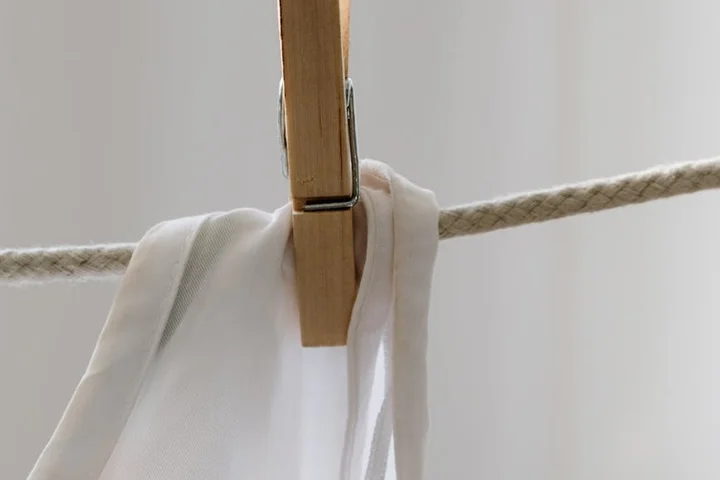
Where you dry matters just as much as how. I always choose a shady spot, like a covered porch or a laundry room with good airflow.
Direct sunlight might seem like a natural bleach, but it can actually cause yellowing on white fabrics over time. My mom Martha in North Texas taught me this. Air-drying in the shade prevents sun-induced damage and lets moisture evaporate gently. It’s the safest way to preserve your fabric’s brightness.
The Final, Damp Check
How do you know if the stain is truly gone? Don’t wait until it’s bone dry. Check it while it’s still slightly damp.
Take the item to a window with good natural light or under a bright indoor lamp. Gently stretch the fabric. Look closely at the previously stained area; any lingering yellow will appear as a faint, shadowy ring when damp. If you see nothing, you’re likely in the clear. If you see a hint of discoloration, it’s back to treating before any heat touches it.
This method has saved countless pillowcases from Jessica’s arts and crafts sessions. A little patience here makes all the difference.
When Stains Won’t Budge: Troubleshooting Persistent Yellowing
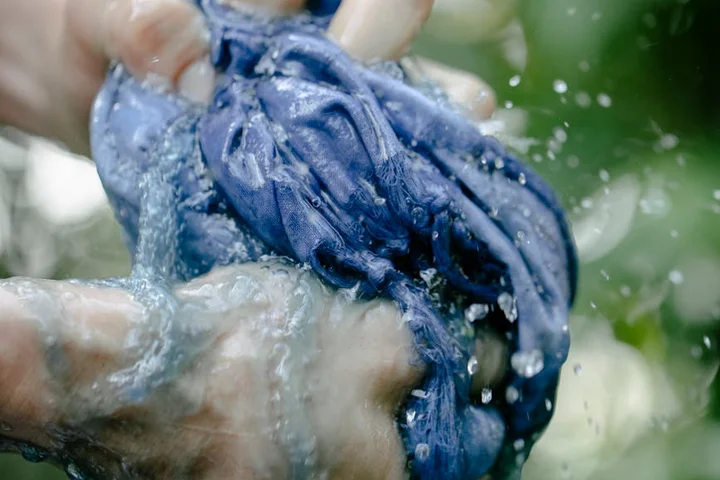
How do you get yellow stains out of white clothes when nothing works? You are not alone. My mom Martha called me last week with the same frustration over a tablecloth.
First, take a deep breath. Stubborn stains need patience, not panic.
When a first attempt fails, the solution is often more time, not a new miracle product.
Give It Another Soak, But Do It Differently
If a baking soda paste did nothing, try a liquid oxygen bleach soak. Switch your approach entirely.
For a shirt that survived my son Jason’s soccer season, I mixed a gallon of warm water with a full cup of oxygen bleach powder. I let it soak for eight hours, checking every few.
Changing the chemical agent and extending the soak time can break down stains that shorter treatments miss.
My aunt Jessica swears by distilled white vinegar for underarm yellowing. I tried it on a linen blouse, soaking it for two hours before a normal wash.
The key is to rinse thoroughly between different treatments. Residue can block the next cleaner from working.
When Yellow Means the Fabric Is Just Tired
Not all discoloration is a stain. Sometimes, it’s the fabric waving a white flag.
Hold the item up to the light. Do you see thin, translucent spots? Gently tug at the yellowed area. If it stretches easily and feels brittle, the fibers are damaged.
Prolonged exposure to sweat, sunlight, or harsh chemicals can weaken cotton and polyester until they yellow permanently.
No chemical can restore integrity to broken-down fibers. Continuing to treat it risks creating holes.
This is common with old pillowcases and the collars of well-loved shirts. My mother-in-law Brianna showed me a sheet set where the yellow was simply part of the fabric now.
A Story About Letting Go: Roger’s Favorite Shirt
I learned this lesson with one of Roger’s old hunting shirts. It was a soft, white cotton tee he’d had for years.
The underarms and back had turned a deep, dingy yellow. I tried every soak and scrub I knew.
One final peroxide soak did lighten it slightly, but the fabric felt thin and fragile in my hands.
The day I held it up and saw light shining through the stained spots, I knew it was time to retire it to the rag bin.
Roger still jokes about it, but it taught me a vital rule. Fighting a stain is good. Fighting fabric decay is a battle you cannot win.
Keeping Whites Bright: How to Prevent Yellowing in the First Place
Treating a yellow stain feels like a win, but stopping it before it starts is the real victory. I built these habits after too many frantic rescue missions for Jason’s white soccer jerseys.
My main rule is simple. Don’t let sweat or body oils settle in, as they are the primary cause of that dull, dingy yellow. This means washing whites soon after wearing them, not letting them fester in the hamper for a week.
Build Smart Laundry Habits
Your routine makes all the difference. Here are the three I follow every single week.
- Wash Soon After Wearing: I treat my husband Roger’ undershirts and my own white tees like dinner plates. You wouldn’t let food crust on a plate overnight. Don’t let sweat set into fabric.
- Measure Detergent Carefully: More soap is not cleaner. Excess detergent leaves a sticky film that traps dirt and turns yellow. I use the line in the cap, not a heaping pour.
- Skip Fabric Softener on Towels and Athletic Wear: Softener coats fibers, reducing absorbency and creating a magnet for body oils. Our bath towels and Jason’s soccer gear get a vinegar rinse instead for softness.
A Monthly “Spa Day” for Bedding
Your pillows and sheets work hard all month. Give them a refresh.
Once a month, I gather all our white pillowcases and sheets. I fill the bathtub with the hottest water safe for the fabric. Then I add one cup of oxygen-based bleach, the powder kind. I let everything soak for at least four hours, sometimes overnight. This monthly soak lifts away the invisible buildup of oils and minerals that regular washing misses. The water often looks cloudy afterwards, which shows you what came out.
Brianna’s Sun-Bleaching Tip (With a Warning)
My mother-in-law Brianna swears by the Texas sun. She’ll dampen a yellowed tea towel and lay it directly on her sunny lawn for an afternoon. The sun’s rays can provide a mild bleaching effect.
I use her method, but with a big precaution. Prolonged, direct sun can weaken fabric fibers over time, causing them to become brittle and yellow faster in the long run. I only do this for an hour or two on already-stained items I’m trying to salvage. For my good bedding, I stick to the oxygen bleach soak. It’s gentler and more reliable.
FAQ About Removing Yellow Stains from White Fabrics
What’s the quickest method to get a yellow sweat stain out of a white shirt I need to wear today?
For a fresh stain, immediately apply a paste of baking soda and a few drops of water directly to the area, scrub gently with a toothbrush, then rinse with cool water. If it’s dry, spot-treat with a dab of liquid dish soap and hydrogen peroxide, let it sit for 20 minutes, then rinse and air-dry-avoid the dryer until the stain is completely gone. However, for suede stains, it’s important to use different cleaning methods to avoid damaging the fabric.
Can I use vinegar or lemon juice on my yellowed white bedding if I’m out of oxygen bleach?
Yes, white vinegar is an effective alternative. Soak the bedding in a bathtub of hot water mixed with two cups of vinegar for one hour to break down oils and residue. Follow with a wash using your regular detergent and half a cup of baking soda to neutralize odors and lift remaining discoloration. This method is particularly useful for removing stains from bed sheets and comforters.
My white pillow still has a yellow spot after washing. What did I do wrong?
This usually means body oils weren’t fully dissolved. Re-wash the pillow using the hottest water the care label allows and add a laundry booster like borax or washing soda to your detergent. Ensure you’re using enough detergent for the bulky item and running an extra rinse cycle to prevent residue, which can trap stains.
How can I safely brighten a delicate white silk blouse that has yellowed with age?
For delicate fabrics, testing is crucial. Mix a gentle solution of one part 3% hydrogen peroxide to four parts cool water, dab it on a hidden seam, and wait 10 minutes. If safe, soak the entire garment in this solution for no more than 30 minutes, then rinse thoroughly and lay flat to air-dry away from direct sunlight.
What’s the most common mistake people make that causes white clothes to turn yellow again after treatment?
The biggest mistake is using too much detergent or fabric softener, which leaves a film that attracts new dirt and oils. Always measure detergent carefully and skip fabric softener on towels and athletic wear. For a final rinse, use plain white vinegar instead to break down any leftover residue and keep fibers bright. These steps also help prevent stains after washing by reducing residue that traps dirt. If a stain appears after washing, treat it promptly to prevent it from setting.
Protecting Your White Fabrics After Treatment
After years of rescuing Jason’s soccer jerseys and our family bedding, I know the most important step is to treat yellow stains with a patient, oxygen-based bleach soak before any heat sets the discoloration. You can find more of my real-life fixes and gentle methods for every mess right here on the blog. That same approach also works on white jerseys and denim when stains pop up. These fabrics benefit from patient, oxygen-based methods that lift grime without weakening fibers.
Written by Suzanne Rosi Beringer. Suzanne is an accomplished chemist, laundry expert and proud mom. She knows the science and chemistry of stains and has personally deal with all kinds of stains such as oil, grease, food and others. She brings her chemistry knowledge and degree expertise to explain and decode the science of stain removal, along with her decades long experience of stain removal. She has tried almost everything and is an expert on professional and DIY stain removal from clothes, fabric, carpet, leather and any other items dearest to you.