How to Remove and Prevent Rust Stains from Toilet Bowls and Surfaces?
Those orange-brown rings in your toilet are a common headache. You can usually dissolve them with a safe, non-toxic acid like white vinegar or lemon juice, followed by a gentle scrub.
This guide will walk you through the entire process, from cleanup to prevention:
- What causes rust to build up in your toilet bowl and on surfaces.
- Step-by-step removal methods using items you already have at home.
- How to prevent future stains with simple routine changes.
- When a stubborn stain means it’s time to check your plumbing.
I’ve tested these methods for years in my own home, battling everything from my son Jason’s post-soccer mess to the well water stains at my mom Martha’s house.
Is That Orange Stain Actually Rust?
You walk into the bathroom and see it. A faint orange or brown streak under the rim of your toilet bowl. It looks like someone spilled tea. Don’t ignore it. That’s a classic rust stain starting its ugly journey.
These stains like to hide. Check under the rim where the water jets out. Look at the bottom of the bowl where sediment settles. They can appear reddish, brown, or even a dull orange. My son Jason noticed a weird spot in our guest bathroom last month and asked if it was “toilet juice.” In a way, he wasn’t wrong.
Panic-Level Assessment (Rating: 3/10)
Breathe easy. This isn’t a juice-box-on-white-carpet emergency. The “golden window” for rust stains is measured in weeks, not hours. A fresh mark might wipe away with minimal effort, but a stain that’s been there for months will need more work. It’s a marathon, not a sprint.
So, what makes these stains appear out of nowhere? The villain is iron. It could be dissolved in your water supply, especially if you have well water. It might come from old, corroding pipes. Sometimes, it’s from a rusting bolt or part inside the toilet tank itself. These are not hard water stains but iron stains.
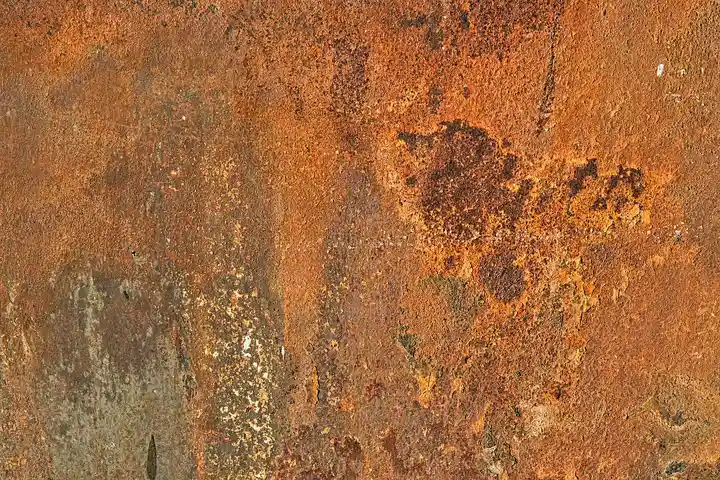
Here’s the key thing my mom, Martha, taught me years ago. You’re usually dealing with a rust stain (discoloration on the porcelain), not actual rust (the crumbling metal itself). You’re cleaning a deposit left behind, not repairing the source. We’ll get to fixing the source later.
Your First Move: How to Stop Rust Stains from Setting
You just spotted a fresh, thin orange line. This is your moment. Your goal isn’t a deep clean yet. It’s to stop the stain from bonding with the porcelain.
- Put on your rubber gloves. Always. No exceptions.
- Flush the toilet to wet the entire bowl surface.
- Grab a pumice stone designed for cleaning. Get it wet. Gently, and I mean gently, scrub the stained area. The pumice is slightly abrasive and can often lift a new stain right off. Don’t scrub like you’re sanding a floor.
- If the pumice stone doesn’t work immediately, don’t force it. Move to a safe chemical approach.
This is the most important rule: never, ever mix cleaning chemicals. Creating toxic chlorine gas by mixing bleach and vinegar is a real and dangerous possibility. I only use one product at a time.
Safe DIY Alternatives You Already Own
You don’t need a specialty product for a new stain. Open your pantry.
- White Vinegar: My Aunt Jessica in Arizona swears by it for everything. Pour a cup or two directly into the bowl, making sure it coats the stain. Let it sit for 30 minutes. The acid works to dissolve the mineral deposit. Scrub with your toilet brush and flush.
- Lemon Juice: Same idea as vinegar. The citric acid is a great, natural rust fighter. It smells better too.
- Baking Soda Paste: If the stain is small, make a paste with baking soda and a few drops of water. Spread it on the stain and let it sit for 20-30 minutes. The mild abrasion and alkaline properties can help lift the discoloration. Scrub and flush.
For me, vinegar is the first line of defense. It’s cheap, effective, and non-toxic for my kids and my dog, Peeta, who drinks from the toilet bowl if we forget to close the lid.
How Do You Remove Rust Stains from a Toilet Bowl?
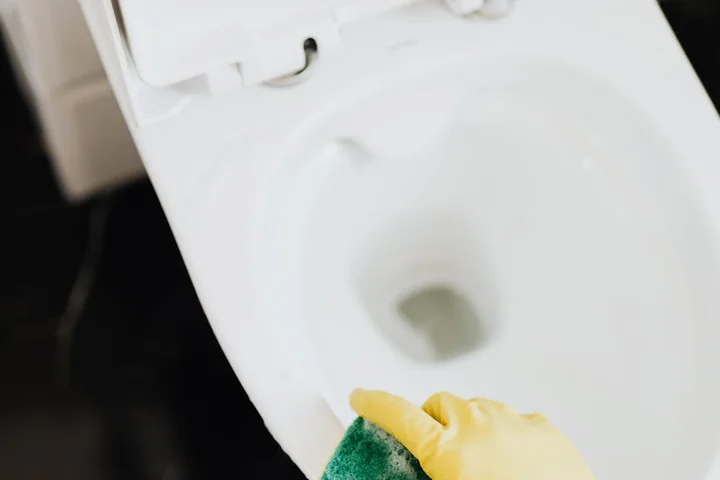
You see those ugly brown or orange marks under the rim. You scrub, but they don’t budge. That’s rust, and it needs a specific approach.
The most reliable way to remove toilet rust is to dissolve it with a mild acid, let it work for several hours, then scrub it away, similar to how you would remove rust stains from sinks and other bathroom surfaces.
This works because the stain is iron oxide, which is a mineral deposit. Acids break that deposit down so you can wipe it clean, unlike organic stains on fabric that often require different treatment.
Chemistry Corner: Why Acid Works
Rust is iron oxide. Think of it as a tiny, hard shell of mineral stuck to your porcelain.
White vinegar and citric acid are weak acids that react with the iron oxide, dissolving that hard shell back into a liquid you can rinse away.
It’s a chemical reaction, not just scrubbing. That’s why soaking time is your best friend here.
The Heavy-Duty Home Remedy: White Vinegar Soak
This is my go-to method. It’s cheap, safe, and sitting in your pantry. I used it just last month on our guest bathroom toilet after my Aunt Jessica visited. It had a stubborn ring from her iron-rich Arizona water.
Here is the step-by-step guide I follow every time.
- Flush the toilet to wet the bowl’s sides.
- Turn off the water supply at the wall and flush again to drain the tank and bowl. This keeps the vinegar from diluting.
- Pour one gallon of plain white vinegar directly into the bowl, making sure to coat all stained areas.
- Let it sit. For fresh stains, 30 minutes might work. For the tough, set-in stains, I leave it overnight. This long contact time is critical.
- Scrub vigorously with a stiff-bristled toilet brush. For really persistent spots, a pumice stone designed for toilets is a safe, gentle abrasive.
- Turn the water back on and flush several times to rinse everything away.
When to Use a Commercial Rust Remover
Are commercial rust removers safe for toilets? Generally, yes. They are formulated for porcelain and ceramic when used exactly as the label directs.
I keep a bottle for emergency stains, like when my son Jason’s metal toy took a swim and left a mark before I noticed.
Always open a window or turn on the bathroom fan when using a commercial product, as the fumes can be strong.
Most are acid-based (like hydrochloric acid), which works fast. Some are oxalic acid or other formulas. Just read the label first to ensure it’s meant for toilet bowls.
Answering Your FAQs: Baking Soda Paste, Coke, and More
Are there natural remedies? Yes, but their power varies. My mom Martha swears by a baking soda paste.
Here is a quick breakdown of common household options.
- Baking Soda Paste: Make a thick paste with water, smear it on the stain, and let it sit for an hour before scrubbing. This works best for very light, fresh stains. It’s more abrasive than dissolving.
- Hydrogen Peroxide: Mixed with baking soda, it can create a fizzing action. It’s okay for mild stains but doesn’t pack the acidic punch of vinegar for tough jobs.
- Coca-Cola: The phosphoric acid in Coke can work on light rust. I tried it once on a light stain. It worked, but it was sticky and less effective than a direct vinegar soak.
For a truly natural and effective approach, the white vinegar soak is your champion.
Keeping Rust Away: How to Prevent Stains from Coming Back
Removing the stain is half the battle. Stopping it from returning is the real win. How often should you clean to prevent rust on concrete surfaces? Weekly.
A quick, proactive wipe-down is better than a major chemical battle later.
Make a habit of giving the bowl a quick scrub with your brush once a week, even if it looks clean.
This prevents any minerals from settling in and hardening. I do this every Saturday morning.
Also, lift the tank lid and look inside. Check the bolts, the chain, and any metal parts. If they are corroded, they are dripping rust into your bowl. Replacing them is a cheap and easy fix.
You can consider a toilet tank tablet that inhibits rust and mineral buildup. Check that it’s safe for your plumbing system and septic tank if you have one first.
The Big Fix: Dealing with Your Water
Can a water softener help prevent rust stains? Absolutely. If your water has high iron content (common with well water), a softener will remove it, helping to prevent rust stains from forming on fabrics.
My husband Roger deals with this at his workshop. The water there leaves orange stains on everything.
A whole-house water softener is the most comprehensive solution, but it’s a big investment.
Start simpler. Have your water tested to confirm iron is the issue. You can also install an inexpensive in-line filter on the toilet’s own water supply line. This catches sediment and rust particles before they enter the tank.
It’s a small step that can make a big difference in your cleaning routine.
Beyond the Bowl: Cleaning Rust from Sinks, Tubs, and Hardware
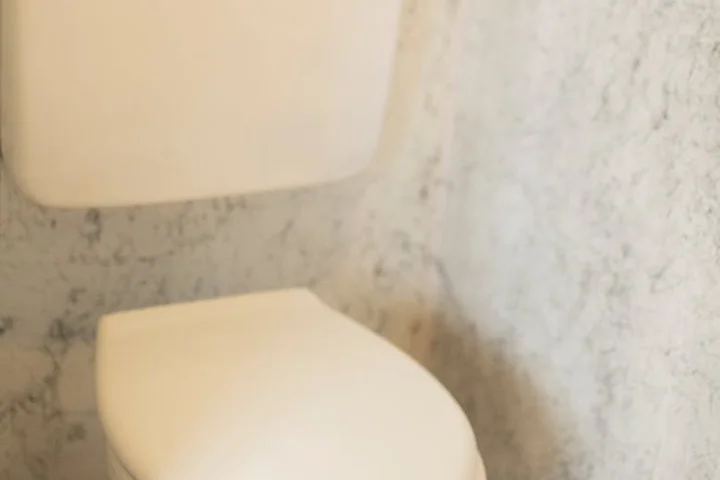
You can tackle rust on other bathroom surfaces with a few targeted methods.
I treat each material like a different stain on my kids’ clothes.
Jason’s soccer socks need a different approach than Jessica’s spilled juice on the couch.
Porcelain Sinks: Gentle Acids Work Best
For a white porcelain sink, I reach for white vinegar or lemon juice.
Soak a cloth in it and lay it over the stain for 30 minutes.
This mild acid loosens the rust without scratching the glossy finish.
My mom Martha swears by this for her farmhouse sink in North Texas.
Scrub gently with an old toothbrush, then rinse everything away.
Fiberglass Tubs: No Scouring, Please
Fiberglass scratches easily, so skip the steel wool.
Make a thick paste with baking soda and water.
Spread it on the stain, let it sit for 15 minutes, and wipe it off with a soft cloth.
I learned this after Jason’s metal cleats left a faint orange trail in our tub.
The paste lifts the stain without leaving dull marks.
Chrome Showerheads: The Soak Method
Unscrew the showerhead if you can and place it in a bowl of white vinegar.
Let it soak for an hour to dissolve the crusty bits inside.
The vinegar breaks down the rust and clears out the clogged holes.
Roger’s hunting knives sometimes drip on ours, and this always fixes it.
Use a toothpick to poke out any stubborn debris after soaking.
Metal Hardware: Towel Bars and Drain Covers
For chrome or brass fixtures, a dedicated rust dissolver gel is safest.
Apply it with a cotton swab, wait as directed, and polish with a dry microfiber cloth.
This precision prevents damage to the protective finish on the metal.
Aunt Jessica’s Arizona home has old hardware, and she uses a similar gel.
Always dry the fixture completely with a towel afterward.
Post-Treatment Recovery: A Crucial Step
Rinse every surface with clean water to remove all cleaner residue.
For metal hardware, take an extra minute to dry it thoroughly.
Leaving moisture on metal is an invitation for new rust to form overnight.
I keep a dedicated drying cloth under the sink for this exact reason.
What NOT to Do: Critical Warnings for Surfaces and Safety
Getting rid of rust shouldn’t create a bigger problem.
I’ve seen too many quick fixes go wrong.
Material Red Flags: Surfaces to Baby
Some materials will be ruined by strong cleaners.
Always avoid harsh acids or abrasive scrubs on these:
- Antique enamel: It’s often thinner and can etch or discolor. Brianna’s heirloom sink taught me this.
- Certain plastics: They can become cloudy or warped. Test a hidden corner first.
- Gold-plated or decorative fixtures: The plating can strip right off. Use only water and a soft cloth.
If you’re unsure about a surface, assume it’s delicate and choose the mildest option.
Never-Use Chemical Combos: A Safety Must
Mixing common cleaners can make dangerous gases.
Never, ever combine these in your bathroom or anywhere:
- Bleach + Ammonia: This creates toxic chloramine gas. It’s not worth the risk.
- Bleach + Vinegar: Mixing these releases harmful chlorine gas. I keep them on separate shelves.
Stick to one cleaning agent at a time and ventilate the room well.
Your health is more important than a slightly faster cleaning job.
The Golden Rule: Test First, Every Time
I test every new method or product in an inconspicuous spot.
Try it behind the toilet tank, under the lip of the sink, or on a back corner of the tub.
This two-minute check can save you from permanent damage to your surfaces.
It’s a habit I picked up after a mishap with a “universal” cleaner on our old fiberglass shower.
When Rust Fights Back: Tackling Old, Set-In Stains
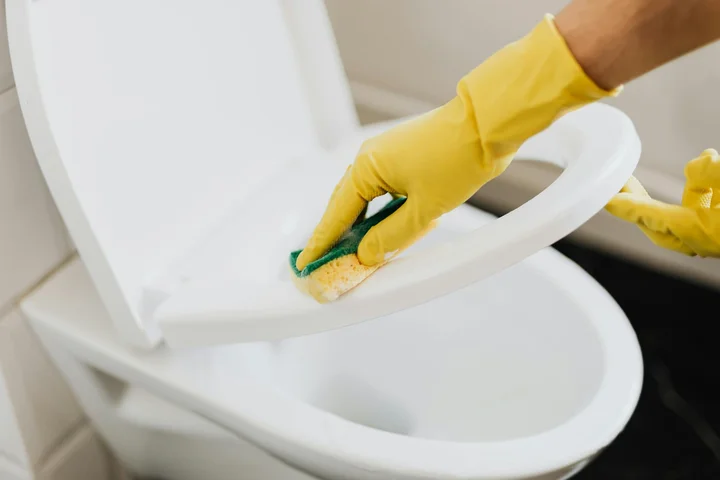
I found a set-in rust ring under my toilet tank lid last year. Roger must have placed a wet wrench there after fixing the sink.
The stain was a crusty, brown-orange color. It felt rough to the touch.
Removing old rust requires patience and a stronger, targeted approach than surface cleaning.
Your Battle Plan for Stubborn Rust
If vinegar or citric acid didn’t work, the stain is likely mineral-heavy and deeply settled. Do not mix different chemical cleaners, especially for stubborn stains.
Always put on rubber gloves and open a window first. This is non-negotiable for safety.
Here is my escalated, multi-step process. I used this on that tank lid stain.
- Apply a Commercial Rust Remover Gel. I chose a thick, clingy gel formula. It sticks to vertical surfaces better than a liquid.
- Let it Dwell. Follow the product’s time instructions exactly. For my stain, I left it for 20 minutes. You will see the orange fade to a dull yellow.
- Scrub with a Dedicated Tool. Use a stiff nylon brush or a pumice stone made for porcelain. I keep a pumice stone just for toilets. It scrapes the rust away without scratching.
- Rinse and Reevaluate. Flush the toilet or rinse the surface thoroughly. If a shadow remains, repeat the process. Some ancient stains need two cycles.
For textured surfaces or corners, a gel remover and an old toothbrush are your best friends for getting into the grooves.
My aunt Jessica in Arizona swears by a different brand. The key is the active ingredient, usually phosphoric or oxalic acid.
When the Stain is a Symptom, Not the Problem
Sometimes, you win the battle but the war continues. New rust stains keep appearing every few weeks.
This happened to my mom Martha. Her toilet had a persistent stain below the rim.
If rust stains return quickly after a thorough cleaning, the issue is likely inside your pipes.
It is time to call a professional plumber. Corroded galvanized steel pipes or a rusting toilet bolt can leach iron into the water constantly.
A good plumber can check your water supply lines and toilet hardware. They might recommend replacing a section of pipe or the toilet’s internal bolts.
I learned this from a plumber who fixed our issue. The cost was worth the peace of mind.
Calling a pro early saves you from endless scrubbing and protects your home from potential water damage.
FAQ about Removing and Preventing Rust Stains
What’s the quickest method for a fresh rust stain in the toilet?
Immediately scrub the stain with a wet pumice stone using gentle pressure. If it persists, pour white vinegar over it, wait 30 minutes, then scrub with a toilet brush and flush. This method is especially effective for limescale rings in toilets.
Can I use lemon juice instead of vinegar for rust removal?
Yes, lemon juice’s citric acid dissolves rust similarly to vinegar. For cost and availability, vinegar is often preferred, but both are safe, natural options for light to moderate stains.
How do I safely use a commercial rust remover without damaging my toilet?
Always ventilate the room, wear gloves, and strictly follow product instructions. Before full application, test it on a hidden spot to ensure it doesn’t etch or discolor the porcelain.
What’s the best way to prevent rust stains on bathroom hardware like towel bars?
After cleaning, thoroughly dry all metal fixtures with a soft cloth to prevent new rust. For maintenance, use a mild vinegar wipe-down, but avoid abrasive scrubs that can damage protective finishes. Rust stain removal on metal surfaces is a common maintenance topic. When stains appear, choose safe, non-abrasive methods to keep the finish intact.
My rust stain won’t budge after trying vinegar. What’s my next step?
Upgrade to a commercial rust remover gel, apply it thickly to the stain, and let it sit for the recommended time. Then, scrub with a pumice stone or nylon brush, and rinse completely-repeat if a shadow remains. This method is especially effective for algae and rust stains on pool liners.
Your Simple Plan for a Rust-Free Bathroom
I always tell my family that the single most reliable method is to stop rust stains before they start by giving your toilet bowl a quick weekly scrub with a paste of baking soda and vinegar. If a stain does appear, acting fast with a gentle, non-toxic acid like lemon juice or citric acid will lift it without harming your porcelain. That same approach can help remove iron stains from tile grout and porcelain surfaces around the home. If you’re dealing with stubborn grout, a soft brush and a cautious touch with lemon juice or citric acid can lift iron stains without damage. For more step-by-step fixes from my home tests with Jessica’s bath toys or Roger’s toolroom messes, keep exploring all the practical advice here on Stain Wiki.
Suzanne is an accomplished chemist, laundry expert and proud mom. She knows the science and chemistry of stains and has personally deal with all kinds of stains such as oil, grease, food and others. She brings her chemistry knowledge and degree expertise to explain and decode the science of stain removal, along with her decades long experience of stain removal. She has tried almost everything and is an expert on professional and DIY stain removal from clothes, fabric, carpet, leather and any other items dearest to you.