How to Remove Water Spots and Hard Water Stains from Glass?
Are cloudy windows and spotted shower doors making your home look dingy? You can dissolve those mineral marks with a simple, non-toxic cleaner you likely already have.
In this article, you’ll get:
- The science behind what causes those frustrating white spots.
- My favorite homemade spray recipe, tested on my shower after Jessica’s bath time.
- Safe scrubbing steps for windows, mirrors, and textured shower doors.
- A easy habit to prevent spots from coming back so quickly.
- My take on when a commercial product is the right tool for the job.
I’ve tackled these stains for years, from my sunroom windows to my aunt Jessica’s Arizona shower glass.
What Are You Up Against? Water Spots vs. Hard Water Stains
When your glass looks cloudy, you’re dealing with dissolved minerals left behind when water evaporates. What you’re seeing on your glass depends on how long those minerals have been sitting there.
Fresh water spots are just mineral deposits. They feel like a filmy haze and wipe away easily with a little extra effort.
Hard water stains are what happens when you ignore that film for weeks or months. The minerals, usually calcium and magnesium, have bonded with the glass surface. They etch in, forming rough, white crust or rings you can often feel with your fingernail—unlike water-based stains that dry on surfaces.
I see both all the time. You get water spots from sprinkler spray hitting your windows, or from the steamy aftermath of a hot shower. Dishwasher spray can leave them on glassware, too.
Panic-Level Assessment: Is This Stain Permanent?
Let’s talk panic levels. For fresh water spots, I give it a 3 out of 10. It’s a minor annoyance, not a catastrophe.
For old, crusty hard water stains, the panic meter jumps to a 7 out of 10. The risk of permanent etching is real.
The key is what I call the “Golden Window.” For water spots, you have days before they start to set. For hard water stains, you might have weeks or a few months before the etching becomes something you can’t fully reverse.
Take a deep breath, because with the right steps, you can almost always restore clarity. I learned this visiting my Aunt Jessica in Arizona last year. Her tap water is incredibly hard. After a week there, I noticed a faint, rough ring starting on her shower door. We caught it just in time.
That experience reminded me that even tough stains have a point of no return. Your goal is to act before you reach it.
First-Aid for Fresh Water Spots: Act Fast
Fresh water spots are just damp mineral deposits. Your goal is to lift them away before they bake on and become a real stain.
Grab a Dry Microfiber Cloth
Start with the simplest tool. A clean, dry microfiber cloth is my first move every time I see a new splash on the mirror.
These cloths have a texture that grabs onto tiny particles better than a regular towel. Gently wipe the spot with firm pressure to see if the mineral crystals come up dry.
This works wonders on recent drips from the bathroom sink or a drinking glass ring on a window sill.
The One-Minute Distilled Water Fix
If a dry cloth doesn’t do it, the minerals have settled. Don’t reach for a cleaner yet.
You need to re-dissolve them. Tap water adds more minerals, which is why I keep a small spray bottle of distilled water under every sink. It’s mineral-free.
- Lightly spritz the spot with distilled water.
- Let it sit for 10 seconds to loosen the deposit.
- Immediately wipe it away with a clean, dry part of your microfiber cloth.
This quick re-wetting and drying often makes fresh spots vanish without a trace.
Blot, Don’t Rub
This is the golden rule for any liquid stain, but especially for minerals in water. Rubbing grinds the chalky particles into the glass surface.
Think of it like rubbing wet cement on a window. You’re just making it harder to remove.
Always use a dabbing or straight wiping motion. Pressing and lifting your cloth is safer than using a circular scrub that can etch the glass over time.
A Tip from Martha: The Daily Squeegee
My mom, Martha, lives in North Texas where the water is notoriously hard. Her shower doors are always spotless.
Her secret isn’t a fancy product. It’s a simple rubber squeegee hung right in the shower.
After every shower, she gives the glass a quick 30-second pass. This single habit prevents water from ever sitting long enough to leave a mark, saving her hours of scrubbing later.
I started doing this five years ago and it cut my shower cleaning time in half. It’s the best kind of first-aid: prevention.
How to Remove Water Spots from Windows, Mirrors, and Shower Doors
For those cloudy, chalky rings, your first move should always be a simple vinegar spray.
This is my standard method for recent, light mineral buildup from hard water. It works because the mild acid in vinegar dissolves the calcium and magnesium deposits.
I keep a dedicated spray bottle in my cleaning caddy filled with a 1:1 solution of white vinegar and water. It’s my absolute go-to for glass.
Always test your cleaning solution on a small, inconspicuous corner first, especially on mirrors or coated glass. This quick check prevents potential damage to any special finishes.
How to Remove Water Spots from Glass Windows
I tackle our patio doors first, as they constantly get sprayed when the kids run through the sprinkler.
You need a handheld spray bottle, a non-scratch sponge (like a melamine foam pad for heavier deposits), and a clean, lint-free microfiber cloth.
Here is my step-by-step process.
- Spray the vinegar solution generously onto the dry glass, completely covering the spotted areas.
- Let it sit for about 5 minutes. You might see the spots start to dissolve.
- Gently wipe the glass with your damp sponge, using small circles to lift the residue.
- Immediately dry and polish the entire pane with your lint-free cloth. This is the key to a streak-free finish.
For stubborn, baked-on spots on exterior windows, a single-edge razor blade held at a 45-degree angle works wonders. Just keep the glass and blade wet with your vinegar solution to prevent scratching.
When people ask me how do you clean stained glass windows at home, they usually mean windows stained by minerals, not decorative leaded glass. This vinegar method is the perfect, non-toxic answer.
How to Remove Water Spots from Mirrors
Mirrors need a gentler touch than a window pane. The silver backing on the glass can be damaged by too much moisture seeping in.
I use the same 1:1 vinegar spray, but I am very careful not to soak the edges.
Always spray your cloth or sponge directly, not the mirror surface, to control the liquid. This keeps the backing safe.
Wipe in a slow, circular motion starting from the center and moving outward. This technique helps push moisture away from the vulnerable edges.
I finish with a completely dry microfiber cloth, buffing until it shines. My bathroom mirror sees a lot of action. After Jason brushes his teeth, it looks like a minty fresco. A quick vinegar wipe-down clears his artwork right up without harsh chemicals.
How to Remove Water Spots from Shower Doors
Shower doors are a battle. You’re fighting a combo of hard water minerals and sticky soap scum.
Vinegar alone sometimes needs backup. For this job, I start with a baking soda paste.
I mix baking soda with a little water until it forms a spreadable paste, like thick frosting.
- With a damp cloth, apply the paste directly to the textured or spotted glass.
- Let it sit for 10 minutes. The baking soda will gently abrade and lift the grime.
- Scrub the area with the cloth. For stubborn textured glass grooves, an old toothbrush is my secret weapon.
- Rinse the paste away completely with warm water.
- Now, follow up with your vinegar spray. The vinegar will fizz slightly, neutralizing the baking soda and dissolving any remaining minerals.
- Rinse again with clean water and dry thoroughly with a squeegee or towel.
For truly stubborn deposits, you may need to repeat the paste-and-vinegar process. Consistency is better than using aggressive, store-bought cleaners that can etch the glass over time.
How to Remove Hard Water Stains from Windows, Mirrors, and Shower Doors

So, the white vinegar didn’t work. That’s okay. We’re now dealing with the crusty, neglected deposits that laugh at mild acids.
It’s time to bring in the heavy artillery. This means using stronger acids or very gentle abrasives that can break down the mineral bonds.
Always put on a pair of rubber gloves and open a window for ventilation before you start these stronger methods. Safety first, every single time.
How to Remove Hard Water Stains from Glass Windows
When you ask how do you get hard water stains off of windows that are really set in, think about citric acid.
I make a simple paste with lemon juice and table salt. The acid attacks the stain, and the salt adds gentle abrasion. Lemon juice is just one of the acid-based stain removers you can use on fabric.
You can also use a powdered citric acid cleaner, which is my go-to for our sunroom windows.
Here is the process I follow every spring.
- Apply your paste or citric acid solution directly onto the dry stain.
- Let it fizz and sit for 15 to 20 minutes. You’ll see the white crust start to soften.
- Gently scrub the area with a non-scratch sponge or a soft-bristled brush.
- Rinse the window thoroughly with clean water. I use a squeegee to prevent new spots.
This method shows you exactly how to remove hard water stains from windows that have been building up for months. This same approach also works on sinks, where mineral buildup around taps and basins is a common issue. Patience and a good rinse are key.
How to Remove Hard Water Stains from Mirrors
Mirrors need a softer touch. The reflective backing can be damaged by strong acids or long soaking.
I use a much weaker version of the vinegar solution here. Sometimes, I just spray it on and wipe immediately without letting it dwell.
My mother-in-law, Brianna, taught me the final step for a perfect shine.
After cleaning, polish the mirror dry with crumpled newspaper instead of a towel.
This newspaper trick leaves a completely streak-free finish and is gentler on the surface than microfiber. It works every time.
How to Remove Hard Water Stains from Shower Doors
Shower doors face the worst of it. Hard water meets soap scum, creating a rock-hard, cloudy film.
For severe etching, I use one of two tools. A dedicated lime scale remover gel works wonders. For a more hands-on approach, a pumice stone is a powerhouse.
Let me tell you about my annual deep-clean. Our Texas well water is brutal. Every year, I wage war on our glass shower enclosure.
The pumice stone is my champion for this battle.
- You must keep the glass surface and the pumice stone soaking wet the entire time.
- Scrub the stained area gently using small, circular motions. The stone will glide and you’ll hear a slight gritty sound.
- Rinse the area immediately to check your progress. The cloudiness will literally melt away.
Keeping everything wet is non-negotiable; a dry pumice stone will scratch the glass. This method restored my shower doors from cloudy to crystal clear.
How to Remove Hard Water Stains from Car Windows
Car windows are a different challenge. They endure sprinkler water and drive-through car washes, leaving behind spotted glass.
The solution for how do you remove hard water stains from car windows needs to be safe for automotive glass. The same gentle approach applies when removing hard water stains from car paint. Avoid harsh scrubbing or abrasive cleaners on the finish.
I never use abrasive pastes or stones here. The risk of fine scratches is too high.
My first choice is a detailing clay bar kit. You spray the lubricant and gently glide the clay over the glass. It pulls the mineral deposits right out.
For a simpler method, soak a towel in white vinegar and drape it over the stained area on the window for 10-15 minutes. Then wipe and rinse.
A clay bar is the most effective and safest tool for spotty car glass, as it cleans without scratching. It’s what I use on my own car after a season of parking under the sprinklers.
The Science Behind the Clean: Chemistry Corner
Let’s get nerdy for a minute. It really helps to know what you’re fighting.
Those white, crusty rings on your faucet and the cloudy film on your shower door aren’t dirt or soap scum. They’re something harder: mineral deposits. My tap water, like many across the country, is “hard.” This means it’s loaded with dissolved minerals, mainly calcium and magnesium.
When hard water evaporates on a surface, those minerals are left behind as a solid deposit, usually calcium carbonate.
Think of It Like Chalk
Here’s my favorite way to picture it. Grab a piece of chalk, if you have one. Feel that rough, dry texture? That’s basically what’s clinging to your glass, just in a much thinner, more stubborn layer. You can’t scrub away chalk dust with just water. It needs a little help, just like removing stains from granite.
That’s exactly what’s happening with your windows. Plain water just smears it around.
Why Vinegar is Your Best Friend
This is where kitchen chemistry saves the day. Hard water stains are alkaline. To break them down, you need an acid. Common household acids—white vinegar, lemon juice, even citric acid powder—create a chemical reaction that works to remove hard water stains from bathroom surfaces.
The acid attacks the mineral deposit (the calcium carbonate) and dissolves it. It turns that solid, crusty chalk-back into a liquid salt that you can easily wipe away with a cloth.
It’s a quiet, fizz-less reaction you can’t see, but it’s powerfully effective. I learned this from my mom, Martha, who has been battling North Texas hard water for 50 years with a spray bottle of vinegar.
This Isn’t a Grease or Juice Stain
This is the key point. Because hard water stains are mineral-based, the tools you’d use on other messes won’t work here. Specifically, a limescale-dissolving approach targets that mineral buildup. This method dissolves hard water stains more effectively.
- Enzyme cleaners (great for pet stains or food) do nothing to minerals.
- Dish soap (excellent for cutting grease) won’t dissolve the deposits.
- Rubbing alcohol (a pro at tackling ink) is ineffective.
Trying to scrub off these stains without an acid is an exercise in frustration. You might polish the glass, but that gritty, cloudy film will remain. That same logic applies to stubborn stains on fiberglass surfaces—use the right cleaner and technique to lift them without scratching. Knowing the “why” makes choosing the “how” simple and stress-free.
Safety First: Critical Warnings and Prevention Tips
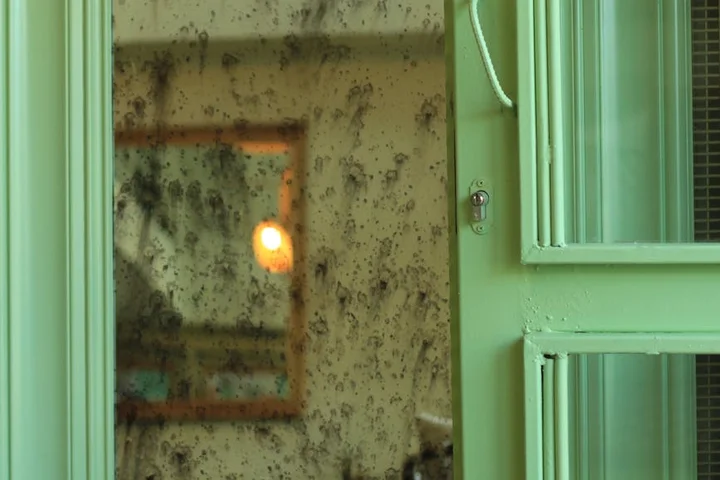
Before you grab the first bottle under the sink, let’s talk safety. A few wrong moves can ruin a surface for good. I learned this the hard way with a bathroom mirror and a too-aggressive pad.
Material Red Flags
Glass isn’t just glass. Different types need different care.
- Never use abrasive scouring pads on tempered glass, like shower doors. Those tiny scratches can weaken the glass and lead to spontaneous, dangerous shattering. It’s not worth the risk.
- Avoid steel wool on any window, especially car glass. It will leave microscopic scratches that catch the light and make every future water spot even more visible.
- Be gentle with mirrors. Their delicate silver backing can be damaged by excessive moisture or harsh chemicals seeping around the edges. Always spray your cleaner onto your cloth, not directly onto the mirror.
Never-Use Chemicals
Some combinations and uses are flat-out dangerous.
- Never, ever mix vinegar with bleach. This creates toxic chlorine gas. I keep them in separate cabinets for this exact reason. If you use one, rinse thoroughly before even thinking about the other.
- Do not use ammonia-based cleaners (like many blue glass cleaners) on tinted car windows. It can cause the tint film to bubble and peel. For car windows, stick to vinegar solutions or dedicated auto glass cleaners.
Smart Prevention is the Best Cure
Fighting mineral buildup is a war of attrition. A little daily effort makes the deep cleans much easier.
After every shower, I run a squeegee down the doors. It takes 30 seconds. My mom, Martha, swears by this and her shower doors look new after a decade.
For cars, applying a quality rain-repellent like Rain-X does double duty. It makes water bead and roll off, which prevents spots from forming in the first place. Roger uses it on his truck and it cuts down on his washes.
A water softener is the ultimate solution if your water is very hard, but it’s a big investment. A more affordable start is a daily shower spray. A quick mist of a vinegar-based spray after you get out stops soap scum and minerals from bonding to the glass.
Trust me, a simple 30-second wipe-down a few times a week makes those marathon scrubbing sessions a rare event. Your future self will thank you.
FAQ about Removing Water Spots and Hard Water Stains
How long should I let the vinegar solution sit on a stubborn shower door stain?
For heavy buildup on shower doors, let the vinegar solution sit for at least 10-15 minutes to properly dissolve the minerals. For very old stains, you may need to reapply the spray to keep the area wet during this dwell time.
What’s a safe alternative to vinegar for cleaning a mirror with a delicate frame?
Use rubbing alcohol (isopropyl alcohol) diluted with equal parts distilled water. It evaporates quickly, minimizing moisture risk to the mirror’s edges and frame, and leaves a streak-free shine.
What should I do if the vinegar and baking soda method didn’t remove the hard water rings from my window?
This means the mineral deposits are etched in and require a stronger acid. Apply a paste of lemon juice and salt, or a commercial lime scale remover gel, following the product’s safety instructions carefully.
Can I use these methods on textured or frosted glass shower doors?
Yes, but scrubbing requires more care. Use a soft-bristled toothbrush to gently work your cleaning solution into the textured grooves, and rinse thoroughly to avoid leaving residue behind.
How can I quickly prevent new water spots after cleaning my car windows?
After cleaning and drying the glass, apply a rain-repellent product like Rain-X. This causes water to bead and roll off, preventing mineral-laden water from sitting and evaporating on the surface.
Your Blueprint for Spot-Free Glass
From all my tests, the single best piece of advice is to tackle fresh water spots immediately with a distilled white vinegar spray and a microfiber cloth. Stopping mineral deposits before they bond is far easier than scrubbing set-in stains later. I share these hands-on methods and more right here on Stain Wiki to help you protect every surface in your home. For granite countertops specifically, I also cover how to remove water stains from granite without damaging the stone. You’ll find stone-safe tips and product ideas here on Stain Wiki.
Suzanne is an accomplished chemist, laundry expert and proud mom. She knows the science and chemistry of stains and has personally deal with all kinds of stains such as oil, grease, food and others. She brings her chemistry knowledge and degree expertise to explain and decode the science of stain removal, along with her decades long experience of stain removal. She has tried almost everything and is an expert on professional and DIY stain removal from clothes, fabric, carpet, leather and any other items dearest to you.