How Do You Remove Stains and Maintain Quartz Countertops?
You just saw a splash of red wine or a blob of curry hit your beautiful, glossy quartz surface, and your heart sank. Don’t panic-most quartz stains are removable with a simple, non-toxic paste.
This guide will show you exactly how to handle messes and keep your counters looking new. We’ll cover:
- Your daily go-to cleaner for routine spills and maintenance.
- A step-by-step stain removal method for dried-on or stubborn marks.
- What common household products can actually damage the resin.
- Simple habits to protect the stain resistance for years.
I’ve tested these methods for years in my own kitchen, dealing with everything from Jessica’s juice art to Roger’s coffee rings.
Your First Move: Assessing the Spill on Quartz
Panic level? Let’s call it a 2 out of 10.
Quartz gives you a huge grace period. You have time to grab a clean cloth without your heart racing. The “Golden Window” for action on quartz is often hours, not minutes. Still, I treat every spill like a test. Quicker is always cleaner.
My first piece of advice is always this: quartz is incredibly tough, but it is not a magic force field. It resists stains, but it can be damaged by the wrong cleaners. That simple truth guides everything.
For any spill, your first-aid kit is your kitchen drawer.
- Blot, don’t rub. Rubbing pushes a spill into the tiny seams of your seal and can scratch the surface. Use a paper towel or clean microfiber cloth.
- Use a damp cloth with warm water and a tiny drop of dish soap. Wipe the area gently. This solves 95% of my daily messes from Jason’s juice boxes or my cooking oil splatters.
- Rinse thoroughly with a clean, water-only cloth to remove any soapy film.
- Dry the spot with a towel. This prevents water spots and lets you see if the stain lifted.
When my Aunt Jessica spills her Cabernet, here’s what I tell her first over the phone. “Jess, breathe. Grab your dish soap. Blot up what you can, then make a soapy little puddle right on top of the wine spot. Let it sit for five minutes while you finish your glass, then wipe it up.” That method has never failed us.
Quartz 101: What It Is and Why It Resists Stains (Mostly)
Let’s break it down simply. Quartz countertops are engineered stone. Think of them as a super-strong cookie made from crumbled natural quartz (about 90-95%) held together with a resin “glue” (about 5-10%). This process happens in a factory under intense pressure and heat.
So, does quartz stain easily? The short answer is no, and here’s why.
The resin binder fills all the natural pores that exist in materials like granite or marble. This creates a surface that is non-porous. There are no microscopic holes for coffee, turmeric, or red wine to seep into and set up shop.
You need to understand the difference between “stain resistant” and “stain proof.” Quartz is resistant. Think of it like a raincoat—it will repel water for a long, long time, but if you submerge it or leave it in a torrential downpour, eventually moisture will get in. A spill left for days, or a super-pigmented dye, can sometimes overcome its defenses. Unlike quartzite, which is more porous, quartz requires less maintenance but isn’t entirely impervious to stains.
Compared to my mom Martha’s granite counters in Texas, quartz is simpler. Granite is porous and needs a sealer reapplied every so often to maintain its resistance. Quartz never needs sealing. That’s a major win for busy homes. When it comes to staining, granite can be more prone to stains compared to quartz.
The critical weakness isn’t the stone-it’s the resin glue holding it all together. Harsh chemicals like oven cleaners, grill cleaners, or undiluted bleach can dull, soften, or discolor that resin. They don’t stain the quartz; they damage the surface that makes quartz so easy to live with. This is why gentle cleaners are your best friends.
Your Daily Defense: The Safe Cleaning Routine
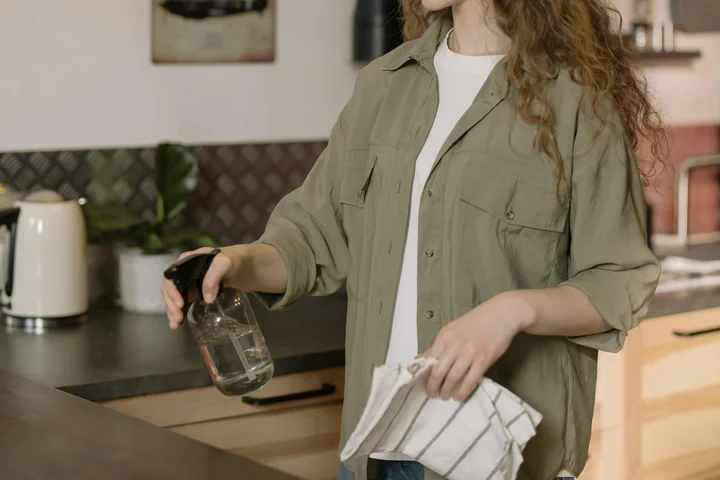
You ask me, “What is the best daily cleaning routine for quartz?” My answer is always the same. It’s not about power. It’s about gentleness.
Quartz is tough, but its beauty comes from a resin. Harsh chemicals can dull that surface over time. Your daily goal is simple. Wipe away grime without leaving a filmy residue behind.
For 99% of my daily cleanups, I use one of two things.
- Mild Dish Soap & Warm Water: This is my absolute favorite. A few drops of a clear, gentle soap in a bowl of warm water is perfect for crumbs, fingerprints, and juice spills.
- A Dedicated Quartz Countertop Cleaner: I keep a bottle of a reputable brand under the sink. I use it when I want a streak-free shine for company or after a big cooking project.
The technique matters as much as the cleaner. I grab a soft microfiber cloth or a sponge with a non-abrasive side. I wipe in gentle circles, then I always do a second pass with a cloth rinsed in clean water.
This final rinse is the secret to preventing that dull, sticky film you sometimes feel on surfaces.
Dry it with another clean cloth. It takes an extra 20 seconds and makes all the difference.
Now, “How do you clean and disinfect quartz properly?” Maybe you handled raw chicken. My toddler Jessica smears her hands everywhere after lunch.
You need to kill germs without damaging the stone. I avoid bleach-based cleaners completely. They can break down the resin and cause yellowing.
My go-to disinfectants are gentle.
- Isopropyl alcohol (rubbing alcohol) in a 70% solution. Spray it on, let it sit for 30 seconds, wipe clean.
- A hydrogen peroxide spray. I use the standard 3% bottle from the first aid aisle. Same method.
Both are effective and evaporate cleanly without leaving residue.
Recommended Products Note: I look for cleaners labeled “pH-balanced” or “safe for quartz.” For cloths, I buy soft, lint-free microfiber in bulk. Avoid anything labeled “scrubby” or with a rough texture. A simple spray bottle filled with your soapy water is your best tool.
Battle Plans for Common Kitchen & Life Stains
“How do you remove common stains from quartz?” You act fast and you use the right tool for the job. Panic is not a strategy. Here is my playbook for the usual suspects.
Coffee & Tea
These tannin stains can leave a light brown ring if ignored. Blot up any spill immediately. For a fresh spill, my soap and water routine handles it.
For a dried ring, I make a baking soda paste. I mix a tablespoon of baking soda with just enough water to make a spreadable paste.
- Spread the paste over the stain.
- Cover it with plastic wrap to keep it damp. I let it sit for several hours or overnight.
- The paste dries and draws the stain up. I wipe it away with a damp cloth and rinse the area.
Cooking Oils & Grease
Grease needs to be cut, not scrubbed. My first move is always dish soap. It’s literally made for this.
- Put a drop of dawn directly on the greasy spot.
- Add a few drops of warm water and gently work it into a lather with your fingers.
- Let that soapy layer sit for 5-10 minutes to break down the oil.
- Wipe clean with a warm, wet cloth and rinse.
The soap needs a minute to work its magic. Patience prevents scrubbing.
Red Wine
My Aunt Jessica visits from Arizona, and red wine is her signature. I’ve seen a few spills. The key is speed. Blot, don’t wipe. Wiping spreads it.
After blotting, I immediately soak the area with isopropyl alcohol. I pour a little on a clean cloth and lay the damp cloth over the spot for a few minutes. The alcohol helps pull the dye out. Then I wipe with soapy water and rinse, especially when dealing with hair dye stains.
Tomato & Turmeric
These are my nemesis stains. That bright yellow turmeric powder is a potent dye. For both, my baking soda paste method is the first line of defense. If a faint shadow remains, I use a 3% hydrogen peroxide spray.
I spray it on, let it bubble for a minute, then wipe. I never let peroxide sit for a long time, just in case.
Food Coloring
Field Note: My son Jason once decided our light quartz island was the perfect canvas for a blue “Gatorade ocean.” The bright blue dye sat for an hour. I learned that isopropyl alcohol is a hero for synthetic dyes.
I soaked a cotton ball in 70% isopropyl alcohol and held it on the blue stain for a minute. The dye transferred right onto the cotton ball. I repeated it until the color was gone, then cleaned the area with soap and water. No trace left behind. This method is particularly effective for removing dye stains from clothes.
Safe DIY Alternatives Box
You don’t always need a special product. My cabinet staples work for most stains.
- Baking Soda Paste: My gentle abrasive for dried organic stains (coffee, tea, tomato). It’s mildly alkaline and helps lift without scratching.
- Isopropyl Alcohol (70%): My go-to for dye-based stains (wine, food coloring, ink). It’s a fantastic solvent that evaporates cleanly.
- Dish Soap: Always the first step for any grease or oil. It’s designed to emulsify fats.
Remember, test any method in a small, inconspicuous area first if you’re unsure. Your quartz is durable, but a little caution goes a long way.
Handling the Really Tough Stains
You look down and see a blob of black ink or a smear of red nail polish. Your heart sinks. I get it. For stains like these, you need a different plan.
For polymer-based stains like ink, permanent marker, or dried glue, you need a solvent to break them apart. Think of the stain as a tangled ball of plastic threads. A solvent like isopropyl alcohol works by loosening those threads so you can wipe them away. That includes pen marker ink stains, which respond to the same solvent approach. In the next steps, we’ll show how to remove pen marker ink stains.
For oily, sticky messes like tar, cooking grease, or lipstick, you need a degreaser. A degreaser cuts through the fat molecules, turning that sticky gunk into something you can wash off with soap.
Your Step-by-Step Plan for the Worst Offenders
Always start gentle. Work your way up only if you need to.
Permanent Marker & Ink
- Put a few drops of mild dish soap on a damp microfiber cloth. Gently rub the stain.
- If it remains, dampen a clean corner of the cloth with 91% isopropyl alcohol. Dab (don’t scrub) the stain.
- As the ink transfers to the cloth, move to a clean area and keep dabbing. Rinse the area thoroughly with water and dry.
Nail Polish
This is a tough one. Act fast.
- If it’s still wet, use a plastic scraper (like an old gift card) to gently lift the bulk of it. Never use metal.
- For the residue, use a non-acetone nail polish remover on a cotton ball. Press it onto the stain for just a few seconds, then wipe.
- Immediately wash the area with soapy water and rinse. Acetone can damage the resin, so non-acetone is your safer bet.
Dried Paint (Latex)
- Try to peel it up carefully with your fingernail or a plastic scraper.
- For stubborn bits, soak a cloth in warm, soapy water and lay it over the paint for a few minutes to soften it.
- Gently scrape again. Avoid paint remover or solvents, as they can cloud the quartz surface.
Tar or Asphalt
- First, harden the tar by placing an ice pack on it for a few minutes. This makes it brittle.
- Gently chip away the bulk with a plastic scraper.
- For the oily stain left behind, use a degreasing dish soap or a tiny dab of Goo Gone on a cloth. Scrub gently, then rinse and dry completely.
If you’ve gone through these steps and the stain is still there, staring back at you, it’s time to stop. A deep, set-in stain might require professional polishing. Trying stronger chemicals at home risks permanent damage. It’s okay to call a pro. Especially when you’re unsure whether to DIY or hire a professional.
The “Never-Ever” List: What Ruins Quartz
Quartz is tough, but its polished surface has enemies. Think of the resin that binds the stone as the countertop’s skin. These things don’t clean it, they chemically burn or scratch it. Even if the stains on quartz countertops look stubborn, scrubbing can do more harm than good.
My mother-in-law Brianna’s go-to scrub cream once left a permanent dull spot on her dark quartz sample. She learned the hard way so you don’t have to.
Material Red Flags: What to Ban from Your Sink
- Abrasive Pads & Powders (Scouring Pads, Comet, Baking Soda Paste): These act like sandpaper. They microscopically scratch the glossy surface, leaving it looking foggy and worn. That’s what happened to Brianna’s sample.
- Harsh Acids (Oven Cleaner, Toilet Bowl Cleaner, Vinegar Grout Cleaners): Acids can etch the surface. This isn’t a stain, it’s a chemical burn that removes the shine, creating a dull, rough patch.
- Strong Alkalis (Undiluted Drain Openers, Heavy-Duty Degreasers): These can break down the resin binder over time, weakening the surface and making it look faded or discolored.
- Undiluted Chlorine Bleach: While very diluted bleach is sometimes okay for disinfection, pouring it straight from the bottle can cause yellowing or discoloration, especially on lighter colors.
- Heat Direct from Pots or Pans: Quartz is heat-resistant, not heat-proof. Placing a scorching Dutch oven right from the stove can cause the resin to discolor or even crack from thermal shock. Always use a trivet.
Treat your quartz like a high-quality non-stick pan: gentle cleansers, soft cloths, and no harsh abrasives. This keeps its stain resistance intact for the long haul. Once that surface is scratched or etched, it’s more prone to holding onto stains in the future—unlike granite, which sometimes requires special care to remove stains effectively.
Keeping That Like-New Shine for Years
Everyone asks me, “How do you keep it from staining in the first place?” The honest answer is simple. Your quartz’s stain resistance is a factory-applied seal, but it’s not magic armor. Think of it like a brand-new raincoat. It beads water beautifully at first, but with enough mud and grime, it needs a proper wash to work well again.
You maintain that resistance by treating the surface kindly every single day, not by waiting for a disaster.
Your Daily Defense: Trivets, Boards, and Coasters
Protective habits are everything. I learned this after my Aunt Jessica left a red wine glass directly on our light-colored quartz for an hour. The panic was real.
- Always Use Trivets or Pads: Hot pans straight from the stove or oven can damage the resin in quartz. I keep a few ceramic trivets and silicone hot pads right by the stove. My son Jason knows the rule: his hot pizza box doesn’t touch the counter.
- Cutting Boards are Non-Negotiable: Quartz is hard, but sharp knives will dull themselves and can scratch the surface. More importantly, acidic foods (lemons, tomatoes) can etch the shine if they sit. I use a large wooden board for prep.
- Coasters for Everyone: This is my biggest household battle. Coffee, tea, wine, soda-they all contain pigments or acids. A simple cork coaster prevents rings. I bought a big pack and placed them everywhere.
These habits feel fussy at first. Now, they’re just how we live. They prevent 99% of my stain problems.
Post-Treatment Recovery: Bringing Back the Luster
Sometimes a stain needs a deeper clean with a paste or a specialized stone cleaner. This can leave the surface looking a bit dull or hazy, which freaks people out.
That haze is usually just a thin film of cleaner residue, not damage.
Restoring the shine is easy. I keep a bottle of a good quartz polish or a cleaner-polish combo for this exact reason.
- Make sure the area is completely clean and dry.
- Spray a small amount of polish onto a clean, dry microfiber cloth. Never spray directly on the counter.
- Buff the area in a gentle, circular motion until the haze disappears and the shine returns.
I do this about once a month in high-use areas. It takes two minutes and makes my counters look factory-fresh again.
Dealing with Hard Water and Soap Scum
If you see cloudy white spots or streaks near your sink, that’s likely hard water or soap film. My mom Martha in North Texas deals with this constantly. It’s a mineral deposit, not a stain.
For this, I use a mild acidic solution. My go-to is a 50/50 mix of white vinegar and water in a spray bottle.
- Spray it on the spotted area.
- Let it sit for no more than 2-3 minutes. Don’t let it dry.
- Scrub gently with a non-abrasive pad or cloth.
- Rinse thoroughly with clean water and dry with a towel.
This quick treatment dissolves the minerals. Rinsing is key to prevent any potential etching from the vinegar.
A Final, Realistic Note on Durability
My house is a test lab. Between Jessica’s art projects, Roger’s greasy tool parts, and Peeta’s muddy paws, our quartz has seen it all.
With the simple care I’ve outlined, quartz is incredibly forgiving and durable.
It won’t stain like marble or etch like concrete. You might face the occasional ring or spot, but you now have the simple steps to fix it. I trust this surface with my chaotic family, and that’s the best endorsement I can give.
FAQ about Removing Stains from Quartz Countertops
I used a baking soda paste overnight, but a faint stain remains. What’s my next step?
After removing the paste, spray a small amount of 3% hydrogen peroxide on the area and let it sit for one minute. Wipe clean and rinse thoroughly; the peroxide can lift the remaining pigment without harsh scrubbing.
Are common disinfecting wipes or all-purpose cleaners safe for quartz?
Avoid cleaners with bleach, citric acid, or vinegar listed as main ingredients, as they can degrade the resin. For safe disinfection, use a spray of 70% isopropyl alcohol, let it sit for 30 seconds, and wipe dry.
What’s the fastest way to handle a fresh ink or dye stain before it sets?
Immediately blot the spill, then soak a cotton ball in 70% isopropyl alcohol and hold it on the stain for 60 seconds. The dye will transfer to the cotton ball; repeat until the color is gone, then clean with soapy water. This method is particularly effective for removing dye stains from fabrics and surfaces.
How is the daily cleaning routine different from maintaining long-term stain resistance?
Daily cleaning removes surface grime, while long-term resistance relies on protective habits. Always use trivets, cutting boards, and coasters to prevent heat damage, scratches, and prolonged contact with pigments.
A tough stain is finally gone, but the spot looks hazy. Did I damage it?
This is usually residue, not damage. Buff the area with a dry microfiber cloth using firm, circular pressure. If haze persists, apply a quartz-specific polish to a cloth and buff until the shine returns.
Keeping Your Quartz as Good as New
Treat every spill like a race-grab a microfiber cloth and gentle soap the moment something hits the surface. That instant reaction is what keeps my countertops, despite Jessica’s juice experiments and Roger’s coffee drips, looking flawless year after year. For more down-to-earth cleaning strategies, follow along right here on the blog.
Suzanne is an accomplished chemist, laundry expert and proud mom. She knows the science and chemistry of stains and has personally deal with all kinds of stains such as oil, grease, food and others. She brings her chemistry knowledge and degree expertise to explain and decode the science of stain removal, along with her decades long experience of stain removal. She has tried almost everything and is an expert on professional and DIY stain removal from clothes, fabric, carpet, leather and any other items dearest to you.