How Do You Remove Hard Water Stains, Rust, and Soap Scum from Kitchen and Bathroom Sinks, Faucets, and Fixtures?
Do dull stains on your sink make cleaning feel hopeless? You can banish most buildup with items already in your pantry, like distilled white vinegar.
This article will give you my tested, step-by-step plans for:
- Lifting hard water stains without harsh chemicals.
- Treating rust spots safely on different metals.
- Breaking down soap scum quickly and effectively.
- Protecting your fixtures to keep them shining.
I’ve spent years perfecting these methods in my own home, from Roger’s muddy hunting gear to the constant messes from Jason, Jessica, and even Peeta the dog.
What Are You Up Against? Identifying Hard Water, Rust, and Soap Scum
You walk up to your sink and see a mess. Knowing what you’re dealing with is the first step to winning.
The Visual and Tactical Guide
Hard water stains look like chalky white or cloudy rings. You feel them with your finger. They are rough and gritty, like dried salt.
Rust shows up as orange or brown spots. They look like dried blood. The spots are often speckled and can feel slightly raised.
Soap scum is a filmy, sticky coating. It makes your chrome faucet look dull and smudged. It feels slick but not clean, and water beads on top of it instead of sheeting off.
The Science of the Stain
Each stain has its own chemistry. Hard water stains are mineral deposits left behind when water evaporates. Think of them as tiny bits of rock (calcium and magnesium) stuck to your surface. You can remove hard water stains from bathroom surfaces using specific techniques.
Rust is iron oxide. It happens when iron or steel gets wet and starts to corrode. A small chip in your faucet’s finish can let this start.
Soap scum is the worst team-up. It’s a gluey mixture of soap, hard water minerals, and oils from your skin. Once it forms, it grabs onto more dirt.
These stains love sinks and faucets because that’s where water sits and dries. I see it every day. My son Jason leaves his wet soccer bottle on the bathroom counter, and a perfect white ring forms in minutes.
Before You Start: Your Safety and Stain Urgency Check
The Panic-Level Assessment
For hard water, rust, and soap scum, I rate the panic level a 3 out of 10. These are slow-build stains, not a grape juice spill on white carpet.
The real “golden window” is a simple weekly wipe-down with a dry cloth. This prevents minerals and soap from ever getting a strong hold. Once they sit for months, they can etch into some surfaces.
Material Red Flags
Your tools and chemicals must match your surface. Getting this wrong can cause permanent damage.
- Never use abrasive scrub pads (like steel wool or harsh green Scotch-Brite) on glossy surfaces. This includes acrylic sinks, gold-plated fixtures, and polished chrome. You will scratch them.
- Never mix cleaning chemicals, especially bleach and vinegar. This creates toxic chlorine gas. It’s dangerous and unnecessary.
- Avoid using straight bleach on metal faucets for rust. It can react and make the problem worse.
- Be very careful with acidic cleaners (like vinegar or CLR) on natural stone like marble or granite. They can etch and dull the finish.
My mom Martha taught me this rule decades ago. “Test first, cry later,” she’d say.
Always do a patch test in a hidden spot first. Try your cleaning solution under the lip of the faucet or on a back corner of the sink. Wait a few minutes, then rinse and check for discoloration or damage.
Kitchen Cabinet Cures: Safe DIY Cleaners You Already Own

You don’t need a cabinet full of harsh chemicals. My own kitchen holds the best cleaners for these stubborn sink problems.
Safe DIY Alternatives
- White Vinegar for Mineral Stains: This is my number one. The mild acetic acid in vinegar breaks down the bond between the minerals and your sink or faucet. I use full strength for tough limescale.
- Lemon Juice or Cream of Tartar Paste for Rust: The citric acid in lemon juice works similarly. For a gentler scrub, make a thick paste with cream of tartar and a few drops of water. It acts like a gentle, acidic polish.
- Baking Soda Paste for Soap Scum: Mix baking soda with just enough water to form a paste. It’s a mild abrasive that cuts through the greasy, filmy layer of soap scum without scratching.
My Aunt Jessica in Arizona swears by straight white vinegar for her faucets, and her water is harder than a rock. She just sprays it on, lets it sit for ten minutes, and wipes the chalky residue away. It’s simple and it works.
How do DIY solutions stack up against store-bought cleaners? For fresh, light deposits and regular maintenance, DIY wins every time. It’s cheap, safe, and effective. For thick, old, crusty limescale that’s been building for months, a commercial acidic cleaner might be faster. Think of DIY as your daily brush and commercial as the deep dental cleaning you need once a year.
How Do You Remove Hard Water Stains from Sinks and Fixtures?
Hard water stains are just dried minerals. You dissolve them with acid. Start by rinsing the sink to remove loose grit. Then, apply your chosen cleaner.
For Stainless Steel Sinks
Always work with the grain of the steel to avoid fine scratches. I pour undiluted white vinegar directly onto a soft cloth or sponge. I wipe it over the stained area, focusing on the dull white rings around the drain. For a really stained stainless steel sink, I’ll soak paper towels in vinegar and lay them over the problem spots for 15-20 minutes. The vinegar needs time to work. Afterwards, I follow up with a proper cleaning and polishing routine.
For Corian or Composite Sinks
These solid surfaces are less porous but can be sensitive to strong acids. A baking soda paste is your safest first step. Gently rub it on soap scum or light mineral spots with a non-scratch sponge. For tougher stains, a very brief vinegar spray and immediate rinse is usually fine. Never let acidic cleaners sit on these surfaces for a long soak, as it can dull the finish.
Post-Treatment Recovery
This step is non-negotiable. Rinse every surface thoroughly with clean water. You must wash away all the dissolved minerals and cleaning residue. I then dry everything-faucet, basin, handles-with a clean microfiber cloth. This prevents new water spots from forming immediately. If you’re working with granite, this prep also sets you up for removing granite stains later. For tougher stains, you may need a targeted stone-safe stain remover to remove granite stains effectively. To check for residue, swipe a dry finger over the surface. It should feel completely smooth, not tacky or gritty.
What Helped Me (Pro-Tip)
Faucet necks and aerators are limescale magnets. My pro-tip is the vinegar towel wrap. I soak several sheets of a paper towel roll in white vinegar. I wring them out slightly and then carefully wrap them around the faucet, especially the underside. I let it sit for 20-30 minutes. The vinegar clings to the vertical surface and dissolves the crust. Afterward, I use an old toothbrush to gently scrub away any leftover bits. It’s oddly satisfying.
How Do You Remove Rust from Faucets and Sink Surfaces?
Rust stains look like gritty orange spots on your fixtures. I use gentle acids and light scrubbing to remove rust stains safely. These tips also apply to sinks and bathroom surfaces. They can help remove rust stains from porcelain, enamel, and ceramic fixtures.
Grab some white vinegar or lemon juice from your kitchen. These mild acids dissolve rust without harsh fumes.
- Dampen a soft cloth with your chosen acid.
- Press the cloth onto the stain so it makes full contact.
- Let it sit for 10-15 minutes. You might see the orange color start to fade.
- Gently rub the area with the cloth. For more power, use a non-scratch sponge or a paste of baking soda and water.
- Rinse well with water and dry immediately.
Always test your cleaning method on a small, hidden spot first, especially on delicate materials.
My husband Roger left a rusty socket wrench in the utility sink last month. It left a perfect, tacky ring. A lemon juice soak for 20 minutes and a soft brush made it vanish.
Be extra gentle on enamel sinks. Their surface scratches if you use abrasive pads. For stainless steel, you can scrub a bit harder, but avoid steel wool. For stainless steel stain removal in sinks, consider appliance-grade tools designed for this material. They can lift stains effectively without scratching or excessive scrubbing.
If a shadow of the stain remains, just repeat the process. The stain is truly gone when you wipe the area dry and the color looks even. No more orange means you’re done. This same method can help remove orange stains from clothes surfaces, too. Test on a hidden area first and follow fabric care guidelines.
How Do You Remove Soap Scum from Shiny Fixtures?
Soap scum is that cloudy, sticky film on your faucets. Start with the easiest fix you probably have on hand.
Fill a bowl with very hot water and add a squirt of dish soap. Soak a microfiber cloth, wring it out, and wipe the fixture. The hot, soapy water melts the scum away.
For Tough, Built-Up Scum
When soap and water aren’t enough, baking soda and vinegar create a lifting fizz.
- Mix baking soda with a little water to make a spreadable paste.
- Smear the paste over the soap scum, coating it thickly.
- Spray white vinegar directly onto the paste. It will bubble up immediately.
- Let the fizzing action work for 5-7 minutes to break up the gunk.
- Scrub the area with a damp cloth to remove the paste and loosened scum.
An old toothbrush is perfect for getting into the tight grooves around faucet handles, a tip my mom Martha swears by.
Rinse every surface with clean water after cleaning. Skipping this step leaves a dull, powdery film. Dry with a soft towel for a bright shine.
Your Surface Guide and Long-Term Prevention Plan
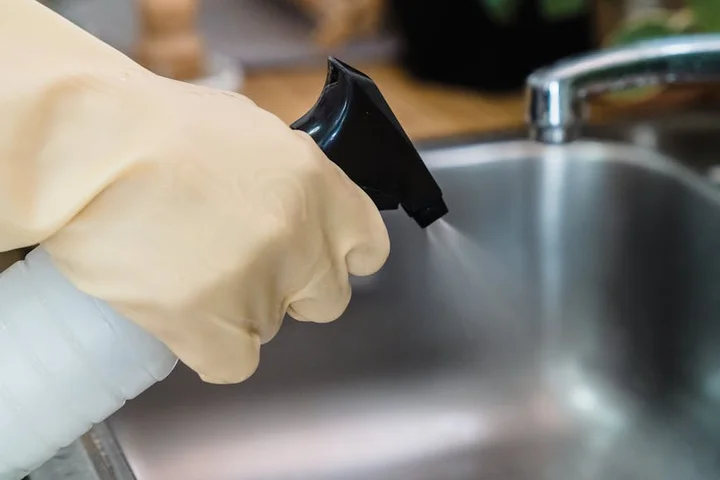
Treating these stains correctly starts with knowing your sink or faucet’s material. Using the wrong method can cause scratches or dull finishes. It’s especially important when dealing with porcelain or ceramic sinks.
I keep this chart taped inside my cleaning cabinet. It saves me from guesswork when Jason’s muddy soccer gear or Jessica’s art project mess hits the sink.
The Surface Compatibility Chart
| Surface | For Hard Water & Soap Scum | For Rust Stains | My Notes & Precautions |
|---|---|---|---|
| Stainless Steel | Spray with undiluted white vinegar. Let it fizz for 5 minutes, then scrub with a soft cloth or non-scratch sponge. | Make a thick paste of baking soda and water. Apply it to the stain, let it sit for 15-20 minutes, then rinse and buff dry. | Always wipe with the grain to avoid micro-scratches. Roger’s hunting knife left a tiny rust spot; the baking soda paste lifted it right out. |
| Porcelain | Same vinegar spray method works well. For stubborn soap scum, a paste of baking soda and dish soap is my go-to. | A damp pumice stone can gently scrub surface rust. Keep the stone and surface wet to prevent scratching. | My mom Martha’s farmhouse sink taught me this: rinse thoroughly after any acid (like vinegar) to protect the glaze. |
| Acrylic/Corian | Use only mild dish soap and warm water with a soft cloth. For mineral deposits, a 50/50 water and rubbing alcohol spray can help. | Extremely gentle methods only. Try a paste of baking soda and water, but test in an inconspicuous area first. | For how to clean badly stained corian sink, remember that harsh chemicals are the enemy. I learned the hard way after using a bleach-based cleaner on mine. Stick to manufacturer-approved, non-abrasive cleaners. |
| Chrome/Brass Fixtures | A quick vinegar spray followed by an immediate rinse and thorough dry works for chrome. For brass, use a dedicated brass polish. | For chrome, try the baking soda paste. For brass, a paste of equal parts salt, flour, and vinegar can work, but polish afterward. | Vinegar can etch finishes if left on. My aunt Jessica’s wine-stained hands taught me to always do a final rinse with plain water. |
The key is to start with the gentlest method and only get more aggressive if you need to. Test any new cleaner on a small, hidden area first, like under the rim.
Stop Stains Before They Start
Frantic scrubbing is no fun. A little daily care makes a huge difference.
- Daily Wipe-Downs: Keep a microfiber cloth under the sink. Give faucets and the sink bowl a quick dry buff after each use. This prevents water spots from hardening.
- Squeegee After Showers: In the bathroom, a small squeegee on the wall tiles and glass doors takes 30 seconds. It drastically cuts down on soap scum buildup.
- Consider a Water Softener: If you constantly fight white scale, your water might be hard. We installed one after years of battle. It was a game-changer for our appliances and skin.
My mother-in-law Brianna, from Southern Texas, always says, “A minute of care saves an hour of repair.” She’s right. Regular, gentle attention keeps everything shining without the elbow grease.
FAQ About Removing Sink and Fixture Stains
What’s the single most important thing I can do to prevent these stains?
Develop the habit of drying your sink basin and faucet with a clean microfiber cloth after each use. This simple, 30-second step prevents water and minerals from sitting and forming hard water spots or soap scum film.
How do I clean an area with hard water stains, rust, AND soap scum all at once?
Always tackle soap scum first, as it seals other stains underneath. Use hot, soapy water or a baking soda paste to remove the top layer of scum, then assess and treat the hard water or rust stains revealed underneath using the specific methods in the guide, such as those for hard water stains on glass surfaces.
I tried the vinegar method, but the hard water stain is still there. What’s next?
Your stain may be too thick for a surface treatment. Soak paper towels in undiluted white vinegar and press them directly onto the stain, letting them sit for at least 30 minutes to allow the acid to penetrate the crusty deposit fully.
How can I remove a small rust spot on my chrome faucet without damaging the finish?
Make a thick paste of baking soda and a few drops of water, apply it to the rust spot, and let it sit for 15 minutes. Gently rub with a soft cloth, then rinse and dry immediately; the mild abrasion and alkaline properties can lift the stain without etching the chrome. It’s a gentle yet effective method for rust stain removal on metal surfaces.
What’s a quick daily habit to keep my fixtures from looking dull?
After washing your hands, give the faucet a quick polish with the dry end of your hand towel. This instantly removes water droplets and prevents them from evaporating and leaving mineral deposits behind, keeping the shine with zero extra effort.
Your Routine for Lasting Clean Fixtures
The single best piece of advice I can give is to make a quick wipe-down part of your daily routine, using the mildest method that works. This simple habit stops hard water, rust, and soap scum from ever becoming a major project. You can find more of my real-world cleaning stories, like managing Jason’s post-soccer messes or Aunt Jessica’s wine glass rings, over on the blog at Stain Wiki.
Written by Suzanne Rosi Beringer. Suzanne is an accomplished chemist, laundry expert and proud mom. She knows the science and chemistry of stains and has personally deal with all kinds of stains such as oil, grease, food and others. She brings her chemistry knowledge and degree expertise to explain and decode the science of stain removal, along with her decades long experience of stain removal. She has tried almost everything and is an expert on professional and DIY stain removal from clothes, fabric, carpet, leather and any other items dearest to you.