Why Do Oil Stains Penetrate Concrete and How Can You Lift Them Out?
You just noticed a new oil stain on your driveway, and it feels like it’s already permanent. Don’t panic-acting fast with simple absorbents like cat litter can pull the oil up before it sets deep.
This article will give you a clear plan:
- The surprising reason oil and concrete bond so tightly
- My tested steps for both fresh spills and old, baked-in stains
- How to use safe, effective cleaners you probably already own
- Simple habits to keep your concrete looking clean
I’ve cleaned up countless stains from our garage and driveway after projects with Roger and our dog Peeta.
The Panic-Level Assessment for an Oil Stain
Picture a fresh, wet oil stain. Your panic meter should be at a solid 8. Now picture a stain that’s been baking into your driveway for a month. That’s maybe a 4. The difference is the “Golden Window.”
You have about 24-48 hours after a spill to tackle it before it truly sets up shop. I treat a fresh stain like a five-alarm fire in my house. Immediate action dramatically shrinks the stain you’ll see later.
Old stains aren’t hopeless. They just need more patience and stronger tactics. Roger’s old truck used to leave little presents on our driveway every time he parked it. Those dark spots took work, but we got them out.
Why Oil Sinks Into Concrete Like a Sponge
Oil penetrates concrete so deeply because concrete is not a solid sheet. It’s full of microscopic holes and tunnels. Think of it as a hard, gray sponge.
When oil hits the surface, it doesn’t sit on top. It gets pulled down into those tiny pores by gravity and capillary action. It travels much faster than water. Water-based cleaners fail because they can’t follow the oil into its hiding spots. The oil just repels them.
The real problem is bonding. As the oil sits, it chemically bonds to the concrete particles deep inside. This is what turns a spill into a permanent-looking shadow.
Chemistry Corner: Oil-Based Stains and Concrete
An oil stain is “hydrophobic.” It fears water. Its molecules are built to repel water molecules. This is why throwing a bucket of water on an oil spill just makes a bigger mess, especially when dealing with automotive oil and grease stains.
This is where our tools come in. An absorbent, like cat litter or baking soda, acts like a magnet for the liquid oil. It draws it back up to the surface through those same pores.
A degreaser works on a molecular level, breaking the bond between the oil and the concrete. It’s exactly like dish soap grabbing grease off a dirty pan. The soap molecules have one end that grabs oil and another that grabs water, letting you rinse the grease away. A concrete degreaser does the same tough job, just deeper down.
Your First Move: How to Stop a Fresh Oil Stain From Setting
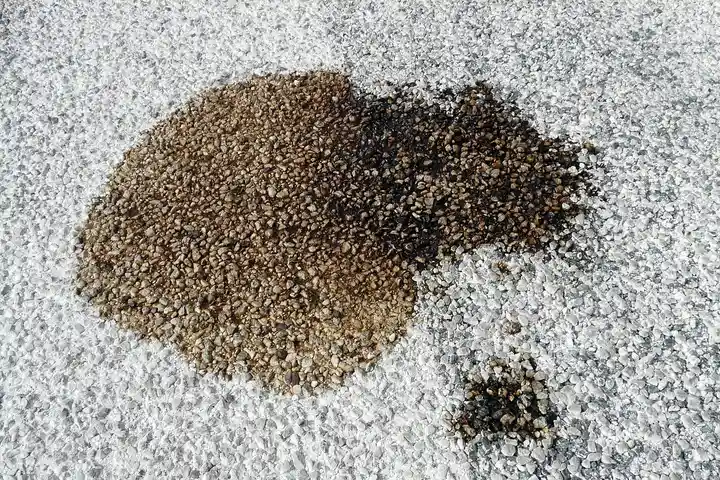
You just watched a dark puddle form under the car. Don’t panic. Your first job is to stop it from becoming a permanent part of the concrete.
Blot, don’t rub. Rubbing grinds the oil deeper into the pores. Use an old rag or paper towels to gently soak up the excess liquid from the surface.
Then, smother it. You need an absorbent powder to pull the oil up before it sinks. Run to your pantry or garage.
Your immediate goal is to cover the spill with a dry, absorbent material to halt its descent.
Safe DIY Absorbents You Already Own
You likely have one of these three items ready to go. Each works, but with different quirks.
- Non-clumping clay cat litter: This is my garage staple. It’s cheap, incredibly absorbent, and the gritty clay particles are great for concrete. Let it sit for at least 30 minutes, but overnight is better for a thick spill.
- Baking soda: It’s mildly abrasive and can help deodorize. It’s less absorbent than litter, so use a generous amount. Expect it to take longer to work, often several hours.
- Cornstarch: This is a fine powder that works well on thin, fresh films of oil. It’s less effective on big, viscous spills. Give it a good hour to do its job.
My favorite is the cheap, plain clay litter. I keep a jug of it right next to my lawnmower oil. After Roger changed the truck’s filter last month, a slick appeared. A thick layer of litter, left overnight, turned into a oily cake I could just sweep away, leaving only a faint shadow to treat later.
The Step-by-Step Removal Guide: From Simple to Strong
Once you’ve contained the spill, it’s time for removal. Think of this as a ladder. Start on the lowest, simplest rung. Only move up if the stain is stubborn.
This tiered approach saves you time and effort, starting with what you already have under your kitchen sink.
Method 1: The Dish Soap Scrub for Fresh Stains
Dish soap is designed to cut through grease on plates. It’s your first-line weapon for concrete, too.
- Sprinkle a small amount of water on the stained area to dampen it.
- Pour a generous glob of concentrated dish soap (like Dawn or Palmolive) directly onto the stain.
- Scrub vigorously with a stiff-bristled brush or broom. Work the soap into a thick lather, letting it emulsify the oil.
- Let the soapy lather sit for 15-20 minutes to penetrate.
- Rinse thoroughly with hot water. Repeat if needed.
Field Note: For a stubborn, fresh stain, I’ll attach a stiff drill brush to my cordless drill. The rapid agitation makes quick work of breaking up the oil and soap mixture, especially in the textured finish of our driveway.
Method 2: The Paste Treatment for Lingering Stains
If the stain has set for a few days or the dish soap didn’t clear it all, you need a paste. This method draws the oil out of the concrete, especially for driveways and patios.
You can make a powerful paste with one of these:
- TSP (Trisodium Phosphate) substitute mixed with water
- A thick paste of baking soda and water
- Powdered oxygen-based laundry detergent (like Oxiclean) and water
Slather a thick layer (about 1/4 inch) over the stain, extending an inch past its edges. The paste will slowly pull the oil upward as it dries.
Let the paste sit overnight, then scrub it off with a brush and rinse. You’ll often see the stain visibly lightened in the dried paste.
Method 3: Using a Commercial Concrete Degreaser
For old, dark stains, a commercial product is often the answer. You have a few types:
- Biodegradable degreasers: Often citrus or soy-based, they’re great for smaller jobs and are less harsh.
- Alkaline cleaners: These are powerful and work well on motor oil and grease. They often require rinsing.
- Concrete remineralizers/cleaners: These clean and can improve the concrete’s appearance.
Safety is non-negotiable. Always wear rubber gloves and safety goggles. Work in a well-ventilated area.
The golden rule? Follow the product’s label instructions precisely for dilution, application, and dwell time. What works for one brand can ruin another.
What Helped Me: The Power Wash Finale
A power washer is a fantastic tool for the final clean, but it’s not the first step.
Using a power washer alone on a fresh oil stain will blast the surface clean for a second, then drive the oil deeper into the concrete as the water soaks in. It makes the problem worse, especially for driveways.
Use your power washer after you’ve treated the stain with soap, paste, or degreaser. It’s the perfect way to rinse away the last traces of cleaner and lifted grime. If stubborn staining remains, you may explore wood stain removal and stripping cleaning methods.
Roger does this every spring. He’ll pre-treat any old drips with a degreaser, let it sit, and then use the power washer to give the whole driveway a bright, uniform clean. The difference is stark.
Critical Warnings and Concrete Care
I learned this lesson the hard way after Roger’s truck leaked transmission fluid on our stamped patio. Using the wrong cleaner left a dull, etched spot that never fully recovered. Your first job is to protect the concrete itself, not just attack the stain. To prevent future issues, learn how to remove stains and seal concrete floors for lasting protection. It’s a small, practical next step.
Decorative or sealed concrete needs gentle care. The sealant is a thin, protective layer. Harsh chemicals can strip it right off.
- Abrasive Tools: Avoid wire brushes or heavy-duty power washers on close settings. They scour the surface, making it rough and more prone to future stains.
- Harsh Acids: Muriatic acid or even strong vinegar can eat away at the concrete’s finish and color, especially on stamped surfaces. It creates a blotchy, damaged look.
- Undiluted Solvents: Pouring straight acetone or paint thinner can break down sealants and drive oil deeper. It’s a messy, risky shortcut.
Some chemicals just don’t belong in this fight. Bleach is useless against oil; it only lightens the concrete around the stain, making the oily shadow look worse. My aunt Jessica once tried it on a wine spill (a different beast entirely) and ended up with a pink-tinged, striped driveway. Stick to degreasers made for concrete. For oil stains on asphalt driveways and walkways, use a degreaser formulated for asphalt surfaces. These products target oily residues without bleaching or harming the surface.
Always, always do a test patch. Pick a hidden corner, like behind a garbage can. Apply your cleaner as directed and wait. Look for color changes or a rough texture. This two-minute test saves you from a permanent, expensive mistake. I do this every time, even with products I’ve used before, because concrete mixes can vary.
Post-Treatment: How to Know the Stain is Really Gone
After you’ve cleaned and rinsed the area, let it dry completely. This takes at least 24 hours, sometimes longer if it’s humid. A true oil stain will often leave a faint, dark shadow as it dries, which is just the remnant stain, not active oil. If the spot feels slick or greasy to the touch, it needs another cleaning pass.
That shadow can be frustrating. I see it all the time after cleaning up where Jason and his buddy Edward work on their bikes. If a second degreasing treatment doesn’t lighten it, the oil is likely gone, and you’re seeing a permanent tint in the pores.
A common hiccup is a white, powdery haze. This “white residue” is usually dried cleaner or mineral deposits from hard water. It looks like a new stain, but it’s just a surface film. Fix it by scrubbing the area with a stiff brush and plain water, or a very dilute mix of one part white vinegar to ten parts water, then rinse thoroughly.
So, when is it “gone enough”? When the area is dry, uniform in texture, and no longer feels oily. If the stain is 90% lighter and you’re not seeing active seepage, that’s your cue to consider sealing. A good concrete sealer fills those microscopic pores, blocking future oil from sinking in. It turns a salvage job into a protected surface, ready for the next project with Roger or playtime with Peeta.
How to Keep Oil Stains From Coming Back
Are there any preventative measures? You bet there are. I asked myself this after Roger’s hunting gear left a fresh oil puddle by the garage door.
Preventing an oil stain is always easier than battling a set-in one, and a few smart habits make all the difference. When prevention fails, knowing how to tackle oil and grease stains on clothes becomes crucial.
Your best defense is a concrete sealer. Think of it as a shield for your driveway or garage floor.
Sealers come in two main types, and choosing one depends on your concrete’s look and traffic.
- Penetrating sealers soak deep into the concrete, like water into a sponge. They repel oil and water from within. I used this on our side patio where the kids play.
- Film-forming sealers create a clear, protective layer on top, like a coat of nail polish. They offer a strong barrier but can wear down in high-traffic areas. My aunt Jessica uses this type on her Arizona carport.
Quick, everyday habits are your second line of defense. They cost almost nothing.
- Use drip trays or heavy-duty mats under parked cars and lawn equipment. Roger’s old truck now rests on a simple tray from the hardware store.
- Keep an absorbent mat in your workspace. It saved my floor when I was changing Peeta’s paw ointment.
- Clean spills the instant you see them. A speedy wipe with a rag beats hours of scrubbing later.
My mom Martha always said, “A dry floor is a happy floor.” She was right.
Recommended Products for Defense and Clean-Up
You don’t need fancy brands, just the right tools for the job. Here’s what to look for on the store shelf.
For sealing concrete, look for a sealer labeled either “penetrating” or “film-forming” based on the protection you need. Apply it to clean, dry concrete for the best results.
For cleaning up fresh spills or treating old ones, have these on hand.
- A biodegradable degreaser. This cuts through oil without harsh chemicals. It’s safer for pets and plants near the driveway.
- A sturdy scrub brush with stiff bristles. The kind meant for outdoor use. It provides the agitation needed to lift grime without wearing you out.
- Absorbent materials like clay litter or commercial absorbents. These are great for sucking up a fresh puddle before it sinks in.
You can find all of these at any hardware store or home center. I picked up my last brush and degreaser during a weekend trip with Jason.
Focus on the product’s function, not the flashy label, and you’ll build a reliable cleanup kit for years.
FAQ about Removing Oil Stains from Concrete
What’s the very first thing I should do for a fresh oil spill?
Immediately blot up excess oil with rags, then smother the stain with a dry, absorbent powder like clay cat litter. This crucial step pulls oil up from the pores before it can set deeply.
My dish soap scrub left a faint shadow. What’s my next step?
Apply a thick paste of baking soda and water or a TSP substitute and let it dry overnight. This paste action will continue to draw the remaining oil out of the concrete after the initial clean.
Is a commercial degreaser always necessary for old stains?
Not always, but it’s the most reliable method for set-in stains, whether water-based or oil-based. For a stubborn, dark stain that resists DIY pastes, a dedicated concrete degreaser is the most effective choice to break the oil’s bond.
How do I know if the stain is truly gone or just waiting to reappear?
Let the area dry completely for 24 hours. If the spot feels slick or greasy, it needs more cleaning. A dry, matte shadow is often a permanent tint, not active oil.
What’s the simplest way to protect my concrete from future stains?
Apply a quality concrete sealer. A penetrating sealer is your best bet, as it soaks in to repel oil and water from within the pores, creating an invisible barrier.
Your Concrete Care Routine Moving Forward
Speed is your best tool against an oil stain-blotting fresh spills right away stops them from becoming a permanent, dull brown ring. After a successful clean-up, a quality concrete sealant creates a barrier that makes future wipe-ups from Roger’s project truck or a dropped cooking oil bottle much simpler. I’m always testing methods like these, and you can find more of my real-world cleaning stories and fixes right here on the blog, especially when it comes to concrete stain removal for oil spills.
Written by Suzanne Rosi Beringer. Suzanne is an accomplished chemist, laundry expert and proud mom. She knows the science and chemistry of stains and has personally deal with all kinds of stains such as oil, grease, food and others. She brings her chemistry knowledge and degree expertise to explain and decode the science of stain removal, along with her decades long experience of stain removal. She has tried almost everything and is an expert on professional and DIY stain removal from clothes, fabric, carpet, leather and any other items dearest to you.